
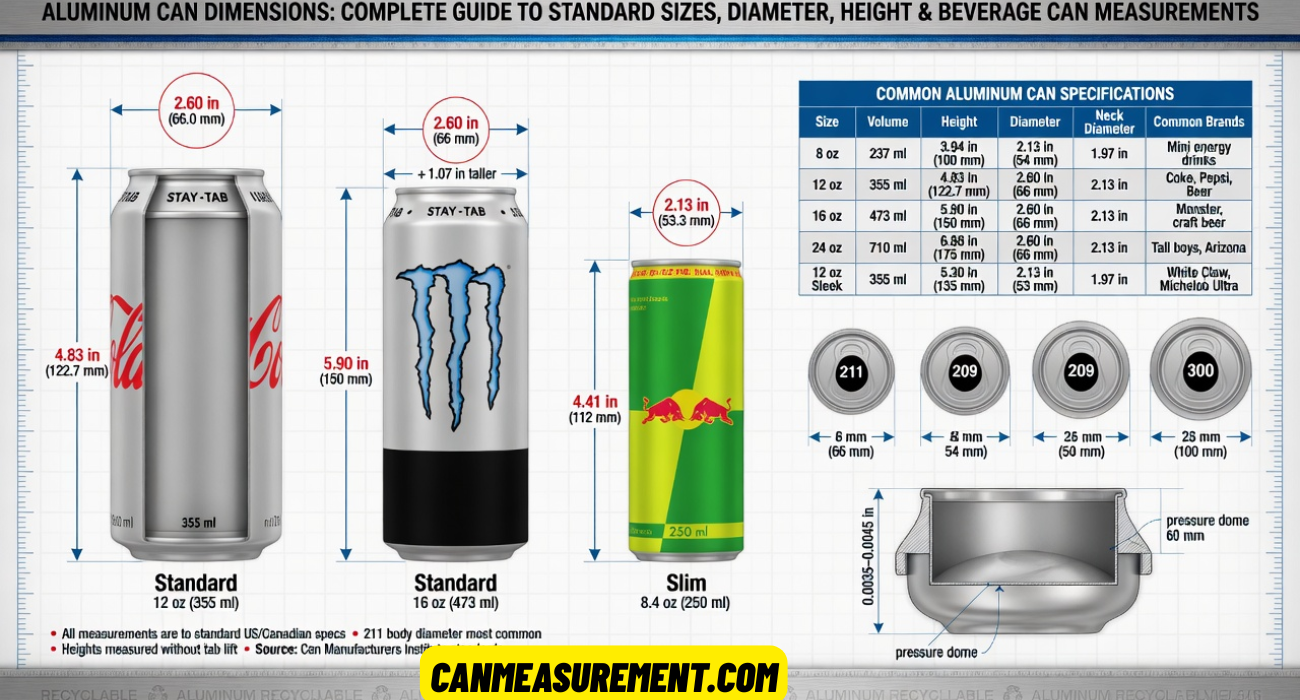
Aluminum Can Dimensions: Complete Guide to Standard Sizes, Diameter, Height & Beverage Can Measurements
Aluminum Can Dimensions means the exact size of a beverage can used for drinks.
It includes height, diameter, and volume in simple measurable units.
These measurements define how big or small each can looks and feels.
You see aluminum cans everywhere in stores, fridges, and vending machines every day.
Still, most people do not notice how carefully their sizes get designed.
Each shape plays a smart role in marketing, storage, and daily use.
Aluminum Can Dimensions guide how companies design and produce drink containers worldwide.
They help improve packaging, transportation, and shelf organization in stores.
Different beverages use different can sizes to match customer needs and usage.
Aluminum Can Size Chart
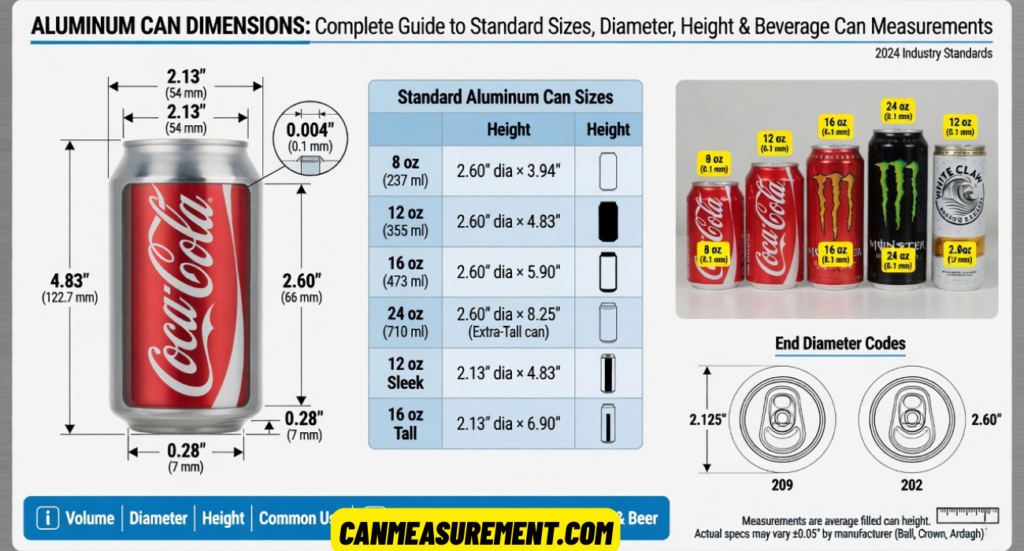
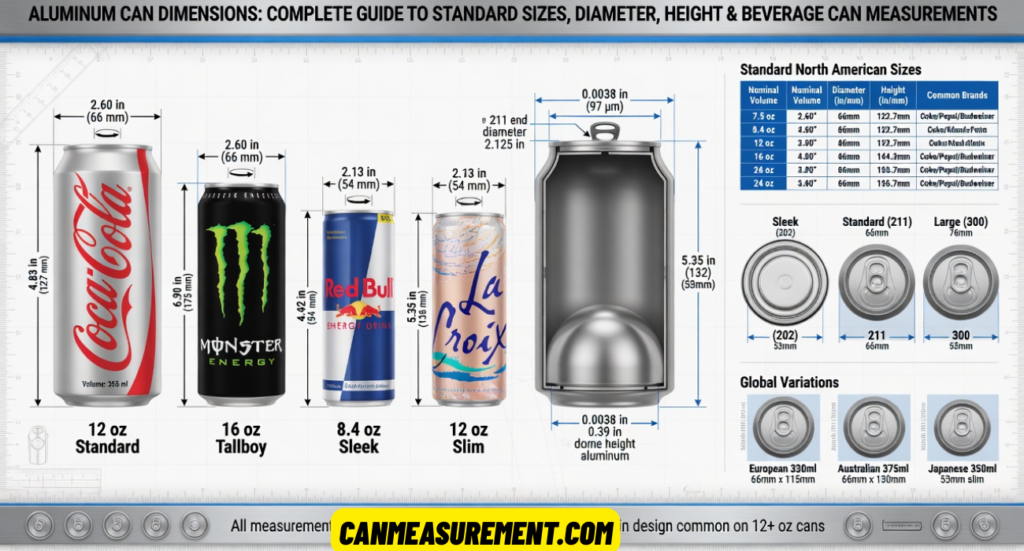
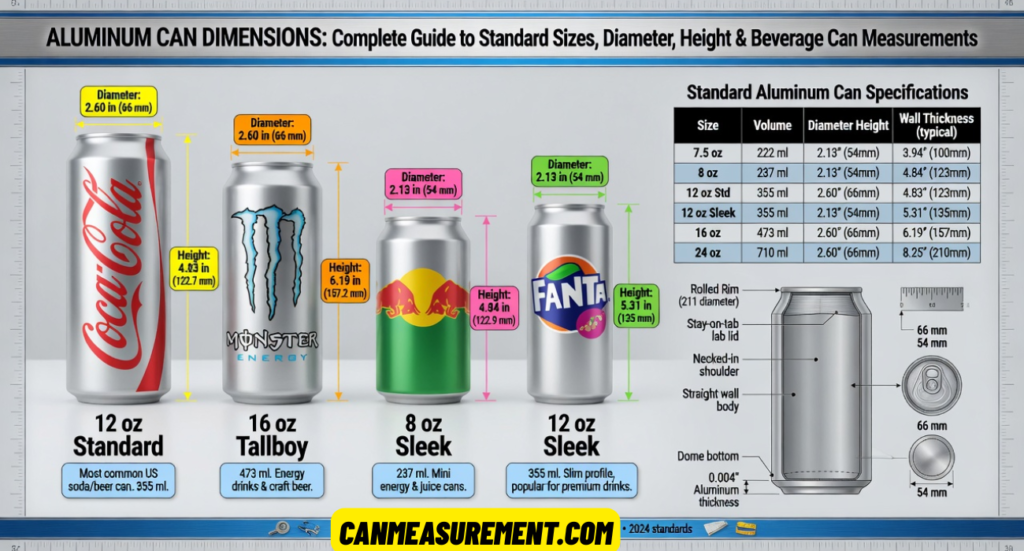
Understanding aluminum can dimensions helps beverage companies, store owners, and everyday buyers choose the right packaging quickly. A detailed aluminum can size chart explains the most common beverage can dimensions used across the United States. Modern aluminum beverage cans come in many shapes because different drinks need different designs. Soft drinks often use a standard can size, while energy drinks prefer slimmer options with taller profiles and modern branding space.
| Can Type | Volume | Diameter | Height | Common Use |
| Standard Can | 12 oz | 66 mm | 122 mm | Soda, Beer |
| Sleek Can | 12 oz | 57 mm | 156 mm | Premium Beverages |
| Slim Can | 250 mL | 53 mm | 134 mm | Energy Drinks |
| Stubby Can | 250 mL | 66 mm | 92 mm | Import Beer |
| Tall Boy | 16 oz | 66 mm | 158 mm | Craft Beer |
Many beverage companies rely on a can size chart because precise can measurements improve shipping, storage, and branding efficiency. The table above works like a practical packaging size guide for manufacturers and retailers. Different can dimensions also affect customer experience. Taller cans create stronger shelf appeal, while shorter cans improve portability. These small changes influence buying decisions more than most people realize in today’s competitive beverage market.
Read Also : 3 Ounces: Simple Guide to Understanding 3 Ounces in Everyday Life
Standard Aluminum Can Dimensions
The most recognized standard aluminum can dimensions belong to the classic 12 oz beverage can found in supermarkets, vending machines, restaurants, and sports arenas. This iconic soda can size measures approximately 2 11/16 inches in diameter and 4.8 inches in height. These numbers may look simple, yet decades of engineering shaped them carefully. Beverage companies needed a can shape that balanced portability, stacking strength, and efficient packaging machinery compatibility.
Most beverage manufacturers still choose this format because the familiar shape works perfectly with modern filling equipment and nationwide distribution channels. The standard size also fits comfortably into car cup holders, coolers, and vending systems. Experts often call this format the beverage industry benchmark because nearly every major soda and beer brand uses it. Even newer designs continue borrowing features from these trusted aluminum container dimensions.
The Standard 12 oz Aluminum Can – America’s Most Common Size
The famous 12 oz aluminum can dominates American store shelves because it combines convenience with practical volume. Consumers instantly recognize this familiar drink can shape whether they buy soda, sparkling water, or beer. The dimensions support quick cooling and easy handling. Beverage companies also appreciate the reliable can functionality because millions of machines already support this exact format nationwide.
A standard 12 oz can usually measures 66 mm wide and 122 mm tall. These exact aluminum can measurement details ensure stable stacking during transport and retail display. The can also uses a standard 202 can lid, which improves manufacturing consistency across multiple beverage categories. This universal design reduces production costs and helps companies maintain strong packaging efficiency while serving millions of customers every day.
Aluminum Can Height Variations Across Different Formats
Different beverages use different aluminum can height specifications because appearance influences customer behavior. Tall cans often look more premium, while shorter cans appear compact and traditional. Modern companies use these subtle differences to shape customer perception. For example, many sparkling water brands prefer taller profiles because they create a cleaner and more elegant visual identity on crowded retail shelves.
Changes in can height also affect shipping and storage requirements. Taller cans increase vertical branding space, allowing companies to display colorful artwork more effectively. Shorter cans improve can stability during transportation and stacking. These design choices may seem tiny, yet they directly impact consumer convenience, warehouse organization, and overall beverage packaging costs across large retail networks.
Aluminum Can Sizes in the US Market
The American beverage industry uses many different aluminum can sizes to match changing customer preferences. Traditional soda brands continue using the classic 12 oz format, while modern brands experiment with slimmer and taller packaging. Consumers now buy sparkling waters, energy drinks, ready-to-drink coffees, and flavored cocktails in specialized containers designed for unique branding opportunities and better shelf visibility.
Popular formats include mini cans, slim cans, sleek cans, and large cans exceeding 24 ounces. These changing trends reflect modern consumer research and shifting health habits. Smaller cans attract health conscious consumers seeking portion control, while larger cans appeal to buyers wanting better value. This diversity keeps the American beverage market highly competitive and visually interesting for shoppers.
Sleek Aluminum Cans – Modern and Sophisticated
Many premium beverage brands now use sleek aluminum cans because the slimmer profile creates a polished and modern appearance. A typical sleek can keeps the same liquid capacity as a standard can but uses a narrower diameter and taller body. This shape instantly communicates luxury and innovation, especially in flavored sparkling waters, hard seltzers, and premium coffee drinks.
The dimensions of sleek cans usually include a 57 mm diameter with a height close to 156 mm. These unique aluminum can specs improve branding opportunities by increasing vertical design space. Companies often select this shape because the taller body enhances shelf presence in busy supermarkets. Many modern premium beverages rely heavily on sleek packaging to stand apart from traditional soda brands.
Stubby Aluminum Can Dimensions
The compact stubby aluminum can dimensions create a completely different customer experience compared to sleek formats. A stubby can appears wider and shorter, giving beverages a classic and nostalgic personality. Import beer brands often use this style because it feels unique and memorable. The shorter body also improves handling and creates excellent stability during transportation.
Most stubby cans hold around 250 mL and measure roughly 92 mm tall with a 66 mm diameter. These proportions make the can feel sturdy and compact in the hand. Many craft breweries choose stubby packaging because it delivers vintage charm while maintaining strong can stability. Even though the size looks smaller, the visual style often increases product memorability among consumers.
Slim Aluminum Can Measurements
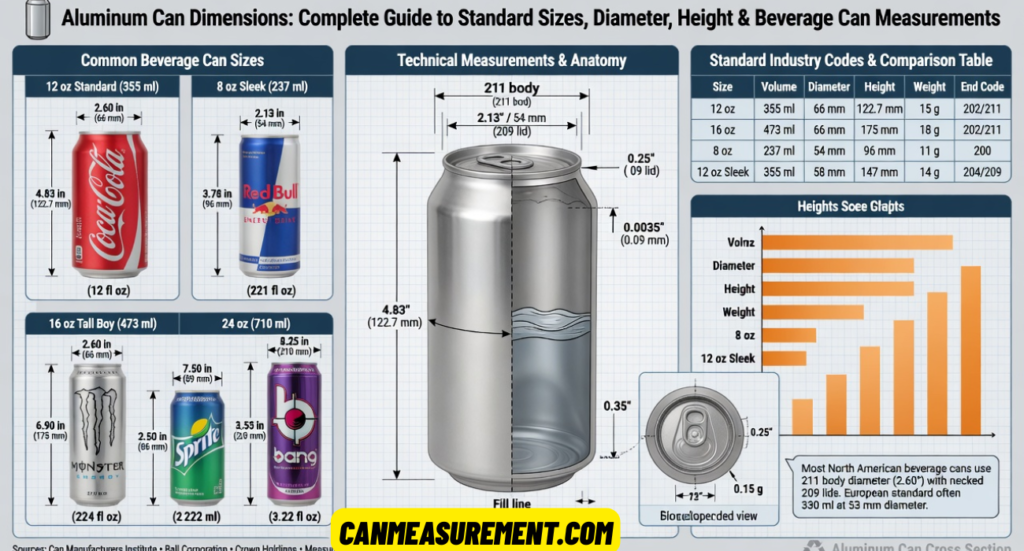
Modern energy drink brands popularized slim aluminum can measurements because narrow cans feel sleek and easy to hold. A slim can usually measures around 53 mm wide and 134 mm tall. The thinner body slides easily into backpacks, coolers, and vehicle cup holders. This convenience helped slim cans become extremely popular across younger consumer groups.
The tall shape also increases visible branding space, which matters greatly in crowded convenience stores. Many energy drink cans and flavored water brands now depend on slim packaging for modern visual identity. Consumers often associate slim cans with healthier products and active lifestyles. This psychological effect shapes strong buying patterns throughout multiple beverage categories in the American retail industry.
Aluminum Can Diameter Specifications
Precise aluminum can diameter specifications ensure beverage containers work correctly with industrial equipment and shipping systems. Manufacturers use highly controlled measurements because even tiny changes can disrupt production speed. Standardized diameters allow automated systems to fill, seal, and package millions of cans every day without delays or equipment failures.
A consistent can diameter also improves stacking strength and transportation safety. Beverage companies cannot risk unstable packaging during shipping because damaged products create expensive waste. Different diameters influence how cans feel in the hand as well. Wider cans provide stronger grip stability, while narrow cans create a more modern and lightweight appearance for customers.
Standard Can Diameter Measurements
The famous 211 body diameter remains the most common standard can diameter measurements used in the beverage industry today. This sizing standard equals approximately 66 mm wide and supports most soda and beer products sold in America. The universal format allows multiple manufacturers to use shared machinery and compatible production systems without expensive modifications.
This consistency became essential during the growth of large-scale beverage manufacturing. Common metal can dimensions improved supply chains and reduced packaging complexity across the country. Today, nearly every major soda brand relies on this format because it balances durability, portability, and production efficiency. The trusted measurements continue shaping modern beverage infrastructure worldwide.
Diameter Variations in Specialty Aluminum Cans
Specialty beverages often use alternative diameters to create stronger visual identity and unique handling experiences. Slim cans use narrower widths, while stubby cans maintain broader structures for enhanced stability. These subtle differences influence how customers perceive product quality, freshness, and value before taking the first sip.
Different diameters also impact branding space, storage efficiency, and transportation costs. Narrow cans fit more efficiently inside retail coolers, while wider cans improve grip comfort. Beverage companies carefully study these details because packaging strongly influences buyer behavior. In competitive markets, even small adjustments in can diameter guide standards can affect long-term sales performance.
Aluminum Can Length and Height
Many people confuse can length with can body height, yet manufacturers measure them differently. Height usually includes the top and bottom seams, while body height focuses on the central cylindrical section. These measurements help factories maintain consistent production quality and reliable sealing performance during high-speed manufacturing operations.
Different beverage container formats require different height ranges depending on intended use. Taller cans create premium appearance, while shorter cans improve storage flexibility. Companies carefully balance these design choices because packaging influences transportation costs, retail organization, and customer convenience. Every millimeter matters in large-scale can production systems.
How Aluminum Can Height Is Measured
Factories measure aluminum can height from seam to seam using advanced precision equipment. These systems verify exact measurements during production because even tiny inconsistencies can affect stacking and sealing quality. Accurate dimensions help maintain product freshness and reduce packaging failures during transportation and storage.
Manufacturers also monitor the double seam structure carefully because the seam contributes to overall can strength. Strong seams prevent leaks and maintain carbonation pressure inside beverages. The precise measurement process protects quality standards across millions of products daily. Reliable sizing remains essential for efficient filling equipment operation and safe shipping practices.
The Relationship Between Can Height and Volume
The relationship between can volume and height follows simple geometry, yet consumer psychology changes how people perceive size. Taller cans often appear larger even when they contain the same amount of liquid as shorter versions. Beverage brands use this illusion strategically to increase product value perception without changing actual volume.
For example, many sleek cans hold the same amount as standard soda cans despite looking noticeably bigger. This visual effect improves premium branding and enhances shelf visibility. Companies use these dimensional tricks carefully because modern consumers respond strongly to package appearance. Smart packaging design often influences purchasing decisions as much as flavor itself.
Popular Aluminum Can Sizes and Dimensions
Several popular aluminum can sizes and dimensions dominate the modern beverage industry. Standard cans remain the most common, yet slim, sleek, and tall boy formats continue gaining popularity. Different drinks require different packaging because branding goals and customer expectations vary widely between product categories.
| Can Type | Diameter | Height | Common Beverage |
| Standard Can | 66 mm | 122 mm | Soda |
| Slim Can | 53 mm | 134 mm | Energy Drinks |
| Sleek Can | 57 mm | 156 mm | Sparkling Water |
| Stubby Can | 66 mm | 92 mm | Import Beer |
| Tall Boy | 66 mm | 158 mm | Craft Beer |
These varying drink can dimensions help companies create distinctive products in crowded stores. Different shapes improve shelf differentiation and branding effectiveness. Beverage brands now spend enormous resources studying can size perception because packaging design directly affects consumer behavior in competitive retail environments.
16 oz Tall Boy Aluminum Can Dimensions
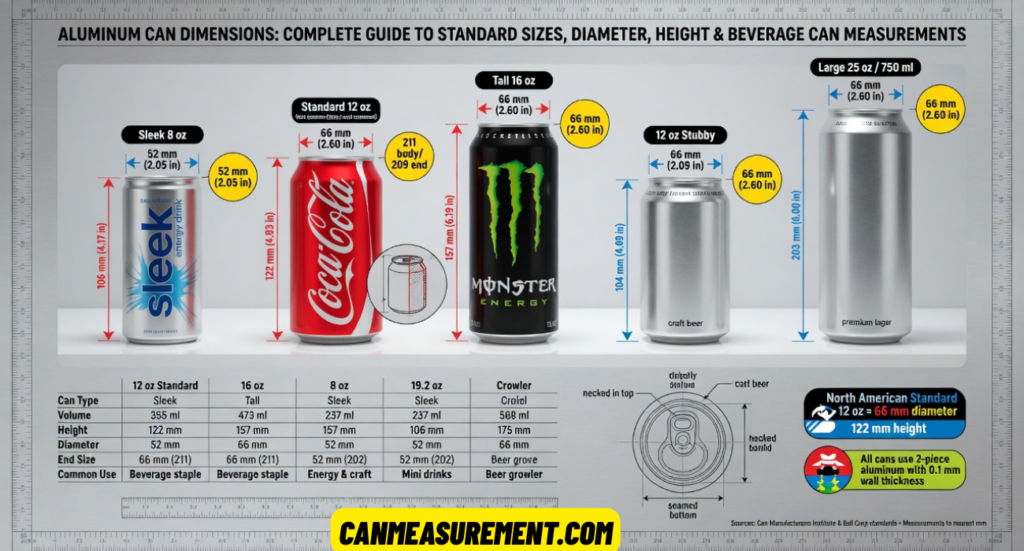
The famous 16 oz tall boy can became extremely popular among beer companies and energy drink brands. A typical tall boy aluminum can dimensions setup includes a familiar 66 mm diameter with a much taller body reaching around 158 mm. This larger format provides more beverage volume while preserving easy handling and manufacturing compatibility.
Consumers often choose tall boys because they deliver greater value and longer drinking enjoyment. Many craft beer cans use this format because larger graphics improve branding visibility on store shelves. The taller shape also creates stronger visual impact in refrigerators and retail coolers. These advantages continue driving growth across the American beverage industry.
Read Also : 2 Ounces: Easy Conversions, Real-Life Examples, and Simple Measuring Tips
Mini Aluminum Can Sizes
Compact mini aluminum can sizes gained popularity because modern buyers increasingly prefer smaller portions and healthier consumption habits. Mini cans usually hold between 7.5 oz and 8 oz, making them ideal for portion control. Families and schools often prefer these smaller containers because they reduce waste and support moderate consumption.
Mini cans also improve portability and convenience during travel or outdoor activities. Many soda brands now include mini cans inside variety packs designed for modern households. Smaller formats help companies attract consumers who want flexibility without committing to larger beverages. This shift reflects broader trends in health awareness and changing buying habits.
Large Format Aluminum Cans (19.2 oz, 24 oz, 25 oz)
Modern large format aluminum cans continue expanding throughout convenience stores and sports venues. Popular sizes include 19.2 oz, 24 oz, and 25 oz formats designed for stronger value perception and single-serve convenience. Many beer companies and energy drink brands now rely heavily on oversized packaging to attract customers seeking longer-lasting refreshment.
A common 440 mL can also appears frequently in imported beverages and specialty products. These larger containers create impressive shelf visibility because taller packaging naturally draws attention. However, bigger cans also increase transportation weight and storage demands. Beverage companies carefully balance these tradeoffs while optimizing packaging performance, branding power, and overall consumer satisfaction.
Beverage Can Dimensions and Packaging Efficiency
Modern beverage companies study beverage can dimensions carefully because packaging efficiency directly affects profits and shipping performance. A properly designed can reduces wasted storage space and improves pallet organization during transportation. Smaller dimensional changes may look unimportant to shoppers, yet they significantly influence warehouse capacity, fuel usage, and retail stocking speed across large distribution systems in the United States.
Efficient beverage packaging also helps brands lower material costs while protecting product quality. Manufacturers now create lighter cans using thinner aluminum walls without sacrificing durability or carbonation protection. This engineering progress improves recycling efficiency and reduces environmental impact. Smart packaging design allows companies to move more products using less material, which benefits both businesses and environmentally conscious consumers.
How Beverage Manufacturers Choose Aluminum Can Sizes
Large beverage manufacturers choose packaging based on branding goals, production costs, and consumer behavior research. A slim energy drink can creates a different emotional reaction compared to a traditional soda container. Companies test multiple can shapes before finalizing designs because customers often judge beverages by appearance before tasting the product itself.
Packaging experts also analyze shelf visibility, grip comfort, and transportation requirements during product development. Different aluminum can sizes serve different beverage categories depending on market trends and customer expectations. Craft beverage companies usually prefer bold and unique packaging styles, while traditional soda brands continue relying on familiar formats trusted by American consumers for decades.
Beverage Can Dimensions and Retail Shelf Appeal
Retail shelf competition remains fierce because hundreds of drinks compete for customer attention every day. Strong shelf appeal often determines whether a shopper notices a product within seconds. Taller cans naturally attract the eye faster, while wider cans communicate stability and familiarity. Beverage companies use these visual tricks strategically throughout supermarkets and convenience stores.
Modern sleek aluminum cans and slim designs improve vertical branding space, allowing larger logos and vibrant artwork. This extra design area helps brands communicate freshness, energy, and premium quality more effectively. Even slight changes in can height chart specifications can influence customer buying behavior because packaging strongly shapes first impressions in crowded retail environments.
Why Slim Cans Dominate the Energy Drink Market
The rise of energy drink cans transformed beverage packaging across the American market. Slim cans became popular because they feel modern, lightweight, and easy to carry during travel or workouts. Their narrow design fits comfortably into bags and car cup holders, which improves convenience for busy consumers living active lifestyles.
A standard slim aluminum can measurements format also creates a premium image associated with fitness and performance. Beverage companies discovered that tall, narrow cans appear more sophisticated than traditional soda packaging. This perception helped slim cans dominate the energy drink industry while influencing newer sparkling water and flavored beverage categories throughout North America.
The Evolution of Aluminum Beverage Cans in America
Early aluminum beverage cans looked very different from today’s advanced packaging systems. Older containers used thicker metal walls and heavier structures that increased production costs. Over time, manufacturers improved engineering techniques and introduced lighter materials capable of maintaining strength while reducing waste and shipping expenses significantly.
Today’s modern cans balance durability, portability, and environmental responsibility better than previous generations. Companies now produce billions of lightweight containers annually using highly efficient machinery. These improvements transformed the beverage industry by lowering transportation costs and improving sustainability. Modern aluminum packaging also cools quickly, which enhances customer satisfaction and overall drinking experience.
Can Lid Size and Beverage Packaging Standards
The standardized can lid size used across most beverage categories improves manufacturing speed and compatibility. The famous 202 can lid remains one of the most common lid formats because it works efficiently with soda, beer, sparkling water, and flavored beverage packaging systems throughout America.
Standardized lids simplify large-scale packaging machinery operations because factories can process multiple product types using similar equipment setups. Consistent lid sizing also reduces maintenance costs and production delays. Beverage companies prefer universal systems because they improve operational efficiency while maintaining reliable sealing performance needed to preserve carbonation and product freshness during distribution.
Aluminum Can Dimensions and Consumer Convenience
Convenience strongly influences purchasing decisions in the modern beverage industry. Carefully planned aluminum can dimensions improve portability, cooling speed, and storage flexibility for consumers. Smaller cans fit easily into lunch bags and refrigerators, while taller cans provide larger servings for events, travel, and sports activities without requiring multiple containers.
Modern packaging also supports lifestyle preferences by offering more options than ever before. Mini cans appeal to people practicing portion control, while larger formats satisfy customers wanting greater value. Beverage companies continuously adapt packaging styles because convenience remains one of the strongest factors affecting long-term customer loyalty and product satisfaction.
Beverage Can Measurements and Transportation Costs
Precise beverage can measurements play a massive role in transportation planning and warehouse organization. Slight differences in can width or height can affect how many products fit inside shipping pallets, trucks, and storage facilities. Efficient packaging helps companies lower fuel expenses and improve delivery speed across national distribution networks.
Smarter packaging efficiency also reduces product damage during transportation. Properly sized cans stack securely and resist crushing better under pressure. Manufacturers constantly refine dimensions to balance strength with lightweight construction. These improvements reduce waste while helping brands move larger quantities of beverages more safely and economically across the competitive American retail market.
Why Craft Breweries Prefer Tall Aluminum Cans
Many craft breweries now favor tall aluminum cans because the larger surface area improves branding opportunities and shelf visibility. A taller container allows breweries to showcase colorful artwork, detailed logos, and creative storytelling that connects emotionally with customers searching for unique beverage experiences.
The popular 16 oz tall boy can also delivers better value perception compared to smaller packaging formats. Customers often associate larger cans with premium quality and extended enjoyment. Breweries benefit because taller cans stand out inside coolers and retail displays, helping independent brands compete more effectively against larger national beverage companies.
Aluminum Can Recycling and Sustainability Benefits
Modern aluminum packaging supports strong environmental advantages because aluminum recycles efficiently without losing quality. Unlike some packaging materials, aluminum can return to production repeatedly through advanced recycling systems. This process lowers energy consumption and reduces raw material demand, making aluminum one of the most sustainable beverage packaging choices available today.
Lightweight metal can dimensions also reduce shipping emissions because trucks can transport more beverages using less fuel. Beverage companies increasingly promote sustainability as consumers become more environmentally aware. Strong recycling systems combined with lighter packaging designs help reduce waste while supporting long-term environmental goals across the global beverage industry.
FAQs
What are the standard aluminum can dimensions?
Standard aluminum can dimensions for a 12 oz beverage can measure about 66 mm in diameter and 122 mm in height, making it the most common soda can size in the USA.
What is the diameter of a standard aluminum can?
The typical can diameter for a standard beverage can is 2 11/16 inches or approximately 66 mm, commonly known as the 211 diameter standard.
Why do slim aluminum cans look taller?
Slim aluminum can measurements use a narrow diameter with extra height to create a sleek appearance, improve branding space, and enhance modern shelf appeal.
What size is a 16 oz tall boy aluminum can?
A 16 oz tall boy can usually measures around 66 mm in diameter and 158 mm in height, offering more liquid volume than a standard 12 oz can.
Conclusion
Aluminum Can Dimensions play an important role in the beverage industry across the United States. Different can sizes help companies pack, store, and sell drinks more easily. Standard cans, slim cans, sleek cans, and tall boy cans all serve different purposes. Each size gives unique benefits for branding, storage, and customer convenience. Beverage companies carefully choose the right can height, diameter, and volume for their products.
People see aluminum cans every day in stores, restaurants, and vending machines. Understanding Aluminum Can Dimensions helps buyers, businesses, and students learn how beverage packaging works. Modern aluminum cans offer strong durability, light weight, and excellent recycling benefits. These cans also improve transportation and shelf organization. Simple changes in can shape and size can make a big difference in product design and customer experience.