

Dollar Bill Dimensions: Complete Guide to U.S. Currency Size and Measurements
Dollar Bill Dimensions describe the size, width, length, and thickness of U.S. paper money. Every modern American bill uses the same standard measurements today. These dimensions help banks, stores, and machines handle money easily and quickly.
Most people carry dollar bills every day without noticing their exact size. A small piece of paper holds a long history and smart design choices. The measurements of U.S. currency help millions of cash transactions happen smoothly across America.
Modern dollar bills measure 6.14 inches long and 2.61 inches wide. The United States started using this standard size in 1929 for better efficiency. These dimensions still support ATMs, wallets, vending machines, and banking systems today.
Dollar Bill Dimensions in Different Units
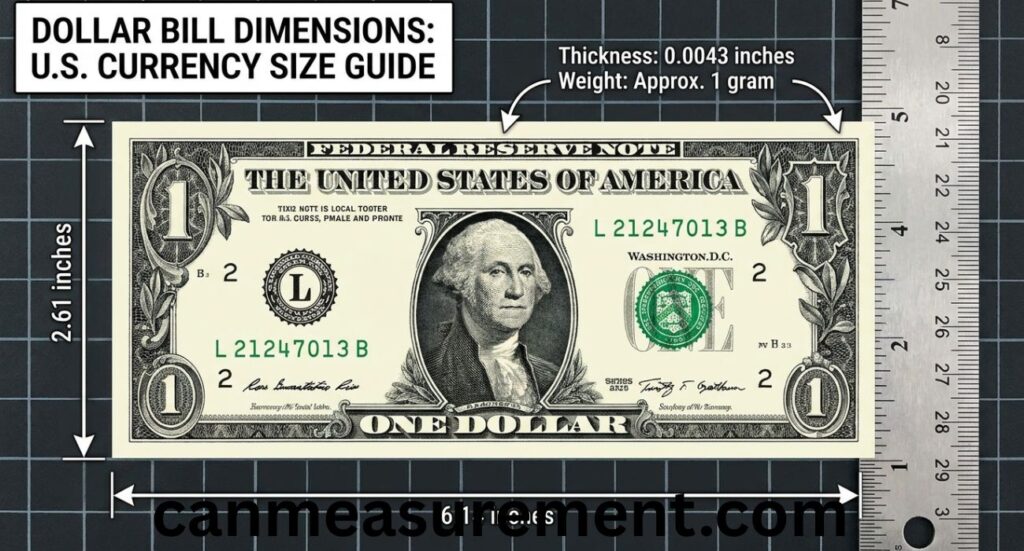
The official dollar bill dimensions in the United States measure 6.14 x 2.61 inches. These exact numbers define the standard U.S. currency size used for every modern denomination today. The dollar bill width equals 2.61 inches while the dollar bill length reaches 6.14 inches. These measurements help banks, ATMs, wallets, and vending machines handle cash smoothly without mechanical trouble or sizing confusion during everyday transactions.
In metric form, the U.S. dollar bill size converts to 156 mm by 66.3 mm. Many collectors and students prefer using the dollar bill in centimeters because metric units offer cleaner precision. These paper money measurements also include the dollar bill weight, which stays near one gram. This reliable sizing system supports the modern banking industry while making American paper money easier to recognize, stack, store, and count accurately.
Read Also; Monster Can Dimensions: Complete Guide to Monster Can Size, Height, Width, and Measurements
Quick Reference Table
The table below gives a quick overview of official paper currency dimensions and standard bill details used throughout the United States. Many readers search for simple charts because they save time and provide fast answers without reading long technical explanations about American money systems and banking standards.
| Feature | Imperial Units | Metric Units |
| Length | 6.14 inches | 156 mm |
| Width | 2.61 inches | 66.3 mm |
| Thickness | 0.0043 inches | 0.109 mm |
| Weight | 0.035 ounces | 1 gram |
These figures appear in almost every professional currency dimensions guide and educational resource about Federal Reserve currency. Businesses also use these numbers for printing equipment, cash drawers, and secure storage systems. The consistent U.S. banknote size allows smooth machine processing while helping collectors compare dimensions between old and modern currency designs without confusion or measurement differences.
Are All Dollar Bill Dimensions the Same?
Yes, every modern American bill shares identical standard dollar bill dimensions regardless of denomination. A one-dollar bill measures exactly the same as a hundred-dollar note. This approach helps machines process money rapidly while lowering printing and storage costs across the national financial system used by banks and businesses daily.
The equal sizing system improves speed and efficiency throughout the economy. ATMs, vending machines, and counting devices work better because all bills follow identical U.S. money dimensions. Although security features and portraits change between notes, the physical size stays constant. This practical system has supported modern American banking operations since the Treasury standardized currency decades ago.
One Size Fits All U.S. Currency
The Federal Reserve uses a single measurement system for every bill because consistency improves cash handling. Uniform sizing allows banks and stores to organize currency faster while reducing mistakes during counting. This system also lowers manufacturing costs because printing facilities produce all denominations using the same equipment and paper dimensions.
Modern wallets, cash registers, and vending machines depend on this uniform design. Consumers rarely notice the advantage because the process feels natural during daily purchases. However, the identical U.S. currency size quietly supports millions of transactions every hour. This efficient structure remains one of the strongest features of today’s Federal Reserve currency printing system.
Historical Dollar Bill Sizes
Before 1929, American currency looked much larger than modern bills. These oversized notes earned the nickname horse blanket currency because they barely fit inside wallets and storage cases. Some examples measured more than seven inches long, making them difficult for banks and businesses to organize efficiently during daily financial operations.
The government later reduced note sizes to improve storage, circulation, and printing efficiency. This major redesign changed the future of U.S. Treasury currency forever. Smaller bills cost less to manufacture and lasted longer during circulation. Today, collectors still admire old large size currency because of its detailed artwork, historical value, and unique appearance compared with modern notes.
Dollar Bill Dimensions by Denomination
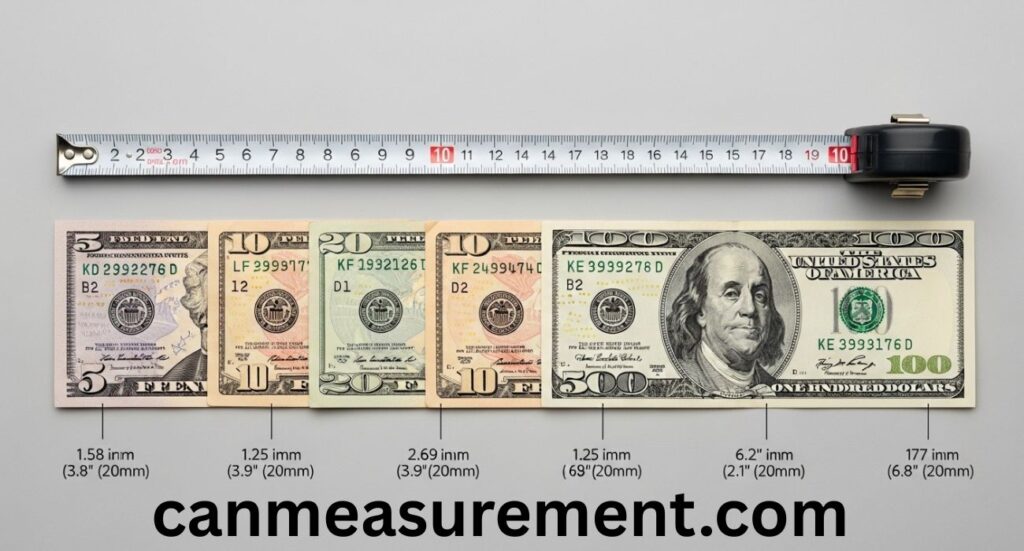
Every denomination follows identical American dollar measurements even though each bill uses different artwork and security elements. A $1 bill, $20 bill, and $100 bill all measure exactly 6.14 x 2.61 inches. This standard sizing keeps transactions simple while helping machines identify and sort bills quickly during circulation.
The $1 bill dimensions, $20 bill size, and $100 bill measurements remain physically equal despite visual differences. Portraits, colors, watermarks, and security strips help distinguish each denomination. This balanced design system combines easy recognition with practical machine compatibility, allowing the American banking industry to process enormous amounts of cash efficiently every single day.
Common Denominations
The one-dollar bill features George Washington while the five-dollar bill honors Abraham Lincoln. The ten-dollar note displays Alexander Hamilton, and the twenty-dollar bill carries Andrew Jackson’s portrait. These familiar designs help Americans recognize denominations instantly during purchases, banking transactions, and cash handling activities throughout the country every day.
The fifty-dollar bill highlights Ulysses S. Grant while the hundred-dollar note displays Benjamin Franklin. The modern Benjamin Franklin bill contains advanced anti-counterfeit features including security ribbons and color-shifting ink. Even with different appearances, every denomination still follows the same standard U.S. bill size, making storage and circulation much easier for businesses and consumers alike.
Rare and Discontinued Bills
Some American bills disappeared from circulation decades ago though collectors still search for surviving examples today. The United States once printed $500, $1,000, $5,000, and $10,000 notes for large financial transactions. These discontinued U.S. bills used the same dimensions as modern currency despite carrying extremely high face values and historical significance.
The famous $2 bill still circulates although many people rarely see one in everyday life. Another legendary note, the $100,000 gold certificate, existed only for Federal Reserve transfers between banks. These rare pieces remain important parts of American financial history while attracting strong interest from collectors and currency museums around the world.
Dollar Bill Thickness and Stack Height
The official dollar bill thickness measures around 0.0043 inches. Although a single note feels extremely thin, large stacks quickly become impressive in size. The special cotton linen paper blend gives American currency durability and flexibility, allowing bills to survive folding, bending, and constant handling without tearing easily during years of circulation.
Large cash stacks create surprising height measurements. One hundred bills form a stack under half an inch tall while one thousand bills rise several inches high. Accurate currency stack calculations help banks estimate storage space and transportation needs. These measurements also explain why high-value denominations reduce physical storage requirements significantly compared with smaller notes.
How Thick Is a Dollar Bill?
The thickness of a dollar bill may appear tiny though it becomes noticeable when large amounts stack together. Ten bills create only a thin layer while ten thousand notes rise more than three feet high. This small measurement plays a major role in banking, storage planning, and secure transportation systems across financial institutions.
American bills use durable fibers instead of ordinary wood-based paper materials. This strong structure allows notes to survive thousands of folds before tearing. The reliable composition helps counting machines process currency accurately even after years of circulation. Because of this durability, modern U.S. bills remain practical, flexible, and dependable during heavy daily use nationwide.
Stack Calculations
The physical height of money stacks often surprises people. A stack of one thousand one-dollar bills stands roughly 4.3 inches tall. Meanwhile, one million dollars in single bills reaches nearly 358 feet high. These fascinating money stack height examples help readers understand how quickly small measurements grow into enormous physical amounts.
High-value bills reduce storage space dramatically. One million dollars in hundred-dollar notes stands only a few feet high and fits inside a large briefcase comfortably. These bill stack height comparisons explain why banks and businesses prefer larger denominations during transportation and secure storage. Simple measurements become astonishing when huge amounts of cash combine together physically.
Why Dollar Bill Dimensions Matter in Everyday Life

Most people handle cash daily without noticing how important dollar bill dimensions truly are. Standard sizing helps stores process payments quickly while reducing machine errors. Wallet makers, vending machine companies, and ATM manufacturers rely on exact measurements to keep transactions smooth and efficient across the United States financial system every single day.
The fixed U.S. currency size also improves convenience for travelers and businesses. Uniform bills fit easily into cash drawers, money counters, and storage boxes without adjustment problems. This practical design keeps daily financial operations simple while supporting the massive circulation system used by banks, retailers, and transportation services throughout America.
Dollar Bill Dimensions Compared to Credit Cards
Many people compare U.S. dollar bill size with standard credit cards because both items stay inside wallets together. A dollar bill appears longer though slightly narrower than a typical bank card. This difference helps users organize cards and cash separately while still keeping everything compact and easy to carry during everyday activities.
The comparison also highlights the practical engineering behind American dollar measurements. Credit cards focus on durability and digital transactions while paper currency emphasizes flexibility and portability. Both items use carefully designed dimensions that support global financial systems, consumer convenience, and fast handling in stores, restaurants, banks, and transportation centers.
Why the United States Uses Uniform Currency Sizes
The United States selected one standard size for all denominations to simplify banking and manufacturing operations. Equal dimensions allow machines to process notes rapidly without constant recalibration. This decision strengthened the national economy while reducing production costs connected to paper money standardization and large-scale cash circulation throughout American businesses and government institutions.
Many countries use different bill sizes for accessibility, though America chose efficiency instead. The identical paper currency dimensions improve storage, transportation, and machine compatibility nationwide. This practical system allows financial institutions to handle billions of notes every year while maintaining fast counting speeds and reducing equipment maintenance costs significantly over time.
How Dollar Bill Measurements Help ATM Machines
ATM machines depend heavily on precise dollar bill measurements to function correctly. Each machine separates, counts, and dispenses notes using sensors designed for exact dimensions. Even tiny variations could create jams or counting mistakes. Standard sizing ensures reliable cash withdrawals while helping banks maintain fast and accurate automated banking services for customers.
The consistent U.S. banknote size also lowers equipment repair costs for financial institutions. Engineers design ATM systems around one universal measurement instead of multiple note sizes. This structure simplifies maintenance while supporting millions of transactions every day. Modern banking technology relies strongly on this dependable and carefully controlled currency measurement system.
Interesting Facts About American Paper Money
Modern American paper money contains no wood pulp despite its paper-like appearance. Instead, manufacturers use a durable cotton and linen mixture that survives heavy handling. This special material gives bills their unique texture and flexibility while improving lifespan during circulation. The design allows notes to withstand folding, moisture, and everyday physical stress.
Another surprising fact involves the lifespan of different denominations. Lower-value bills wear out faster because people exchange them more often. One-dollar notes may circulate for only a few years while hundred-dollar bills survive much longer. These differences affect printing schedules, replacement costs, and overall management of the American currency system nationwide.
Dollar Bill Weight and Cash Calculations
The average weight of a dollar bill remains close to one gram regardless of denomination. Banks use this standard weight to estimate large amounts of currency quickly. Instead of counting every single note manually, institutions sometimes weigh stacks of cash to speed up processing and improve accuracy during transportation or storage procedures.
Large amounts of money become surprisingly heavy when measured physically. One million dollars in one-dollar bills weighs more than two thousand pounds. However, the same amount in hundred-dollar notes weighs far less overall because fewer bills are needed. These calculations demonstrate the practical value of higher denominations in financial operations.
Security Features Found on Modern Dollar Bills
Modern American currency includes advanced security systems that protect against counterfeiting. Watermarks, color-shifting ink, hidden threads, and microprinting appear on most higher denominations. These features improve trust in Federal Reserve currency while helping businesses and consumers verify authenticity quickly during purchases, banking transactions, and large financial exchanges across the country.
The latest Benjamin Franklin bill contains one of the most advanced designs ever printed by the Treasury. Blue security ribbons and detailed printing techniques make duplication extremely difficult. Despite these modern upgrades, the physical dimensions remain unchanged. This combination of innovation and consistency strengthens confidence in American cash worldwide.
How Collectors Measure Rare Dollar Bills
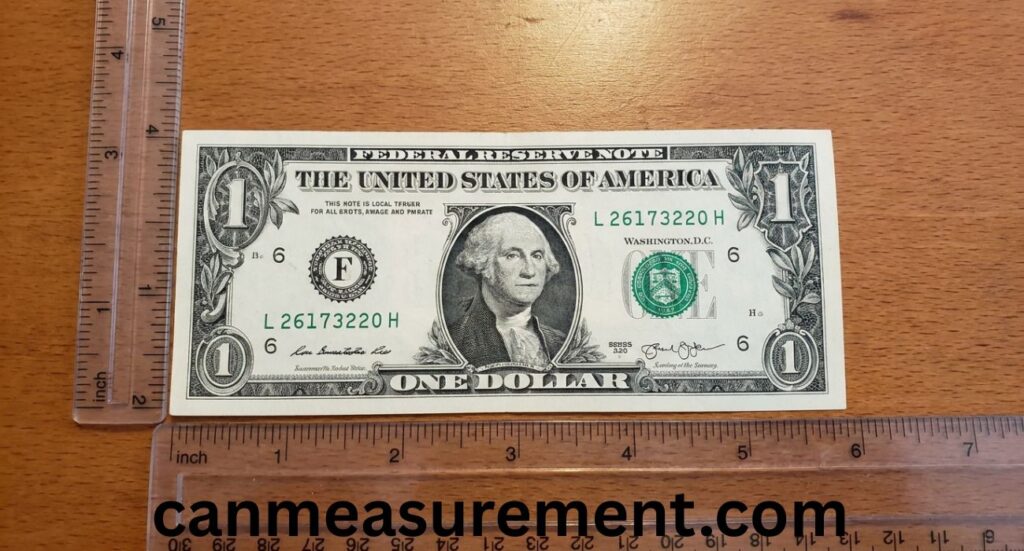
Currency collectors pay close attention to exact paper money measurements because size differences can affect value greatly. Older oversized notes often sell for high prices because they represent important moments in financial history. Collectors also inspect corners, edges, and printing alignment carefully before determining authenticity and market value for rare bills.
Special protective sleeves and display cases rely on accurate sizing standards. Even small variations in U.S. money dimensions may reveal trimming, damage, or counterfeit alterations. Serious collectors use professional tools and detailed guides to compare dimensions correctly. Accurate measurements remain essential in the world of historical currency collecting and preservation.
The Science Behind Dollar Bill Durability
American currency survives daily abuse because engineers designed it with remarkable durability in mind. The strong cotton linen paper blend resists tearing better than ordinary notebook paper. Bills pass through thousands of hands during circulation while enduring folding, moisture, friction, and pressure inside wallets, cash registers, vending machines, and banking equipment constantly.
Researchers also test currency strength using advanced laboratory methods. Machines fold bills repeatedly to measure lifespan under realistic conditions. This testing process helps the Treasury improve note durability without changing the trusted dimensions. The combination of flexible fibers and careful engineering keeps U.S. bills dependable throughout years of heavy circulation.
Dollar Bill Dimensions and Global Currency Comparisons
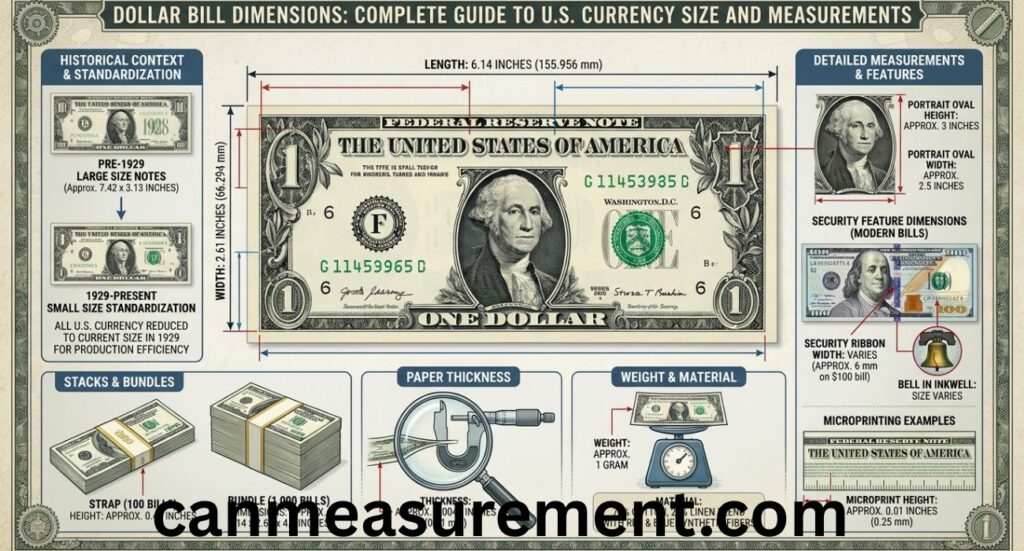
Different countries use different sizing systems for their paper money. Some nations print larger bills for higher values while others create colorful variations for accessibility purposes. In comparison, the American system focuses heavily on consistency and machine efficiency. This practical approach defines the unique structure of modern currency size comparison standards worldwide.
The equal sizing model simplifies banking operations though some critics argue it creates accessibility challenges for visually impaired users. Despite debates, the standard U.S. currency size continues supporting one of the largest financial systems on Earth. The measurements remain a symbol of stability, efficiency, and long-term economic planning within American banking history.
FAQs
What are the official dollar bill dimensions?
The official dollar bill dimensions measure 6.14 x 2.61 inches or 156 mm by 66.3 mm. Every modern U.S. bill follows these exact measurements.
Are all U.S. dollar bills the same size?
Yes, all modern denominations use the same standard U.S. bill size. A $1 bill and a $100 bill share identical physical dimensions.
How thick is a dollar bill?
The average dollar bill thickness is about 0.0043 inches or 0.109 mm. Bills use a strong cotton linen paper blend for durability.
Why did the United States standardize dollar bill dimensions?
The government introduced paper money standardization in 1929 to reduce printing costs and improve machine compatibility for banks, ATMs, and businesses.
Conclusion
Dollar Bill Dimensions play an important role in the American money system. Every U.S. bill uses the same standard size, which helps banks, stores, and machines work smoothly every day. The size, thickness, and weight of dollar bills make cash easy to carry, count, and store. These measurements also support quick transactions and safe money handling across the country.
The history of American currency shows how smart design improves daily life. Modern bills use strong materials and advanced security features while keeping the same trusted dimensions. Learning about Dollar Bill Dimensions helps students, collectors, and readers understand how U.S. currency works. These simple measurements represent efficiency, stability, and a long tradition of American financial design.