
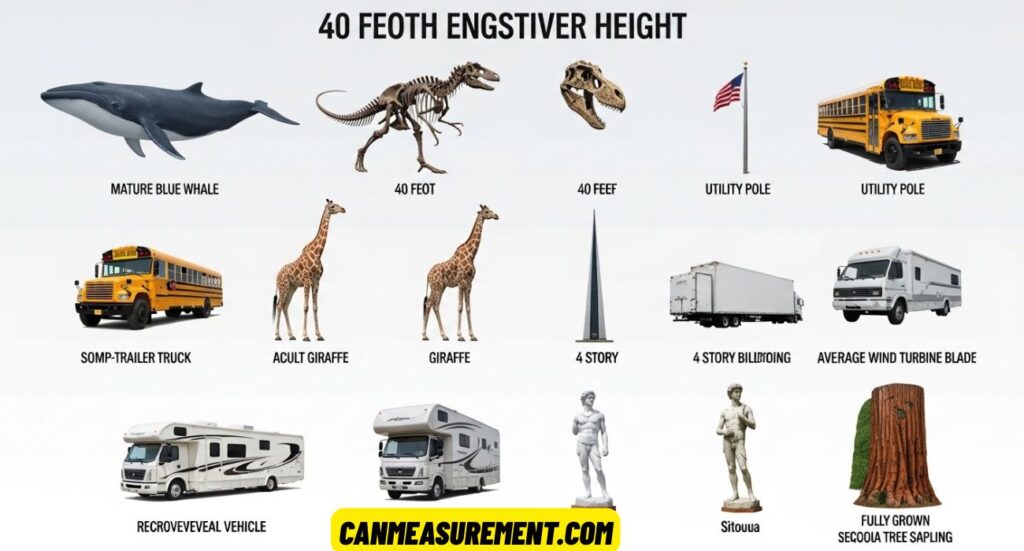
40 Feet: 12 Things with Pictures That Are 40 Feet Long or Tall
40 Feet is a unit of length used to measure distance, height, or size. It equals 480 inches and 12.19 meters. Many large objects and structures measure about 40 Feet in length or height.
Most people hear the number 40 Feet but find it hard to picture. The answer becomes simple when you compare it with familiar objects. A city bus, a shipping container, or a four-story building can help you see its true size.
You can find 40 Feet in transportation, construction, shipping, and boating. It appears in many places across everyday life. Learning these examples makes it easier to understand and estimate this useful measurement.
How Long Is 40 Feet?
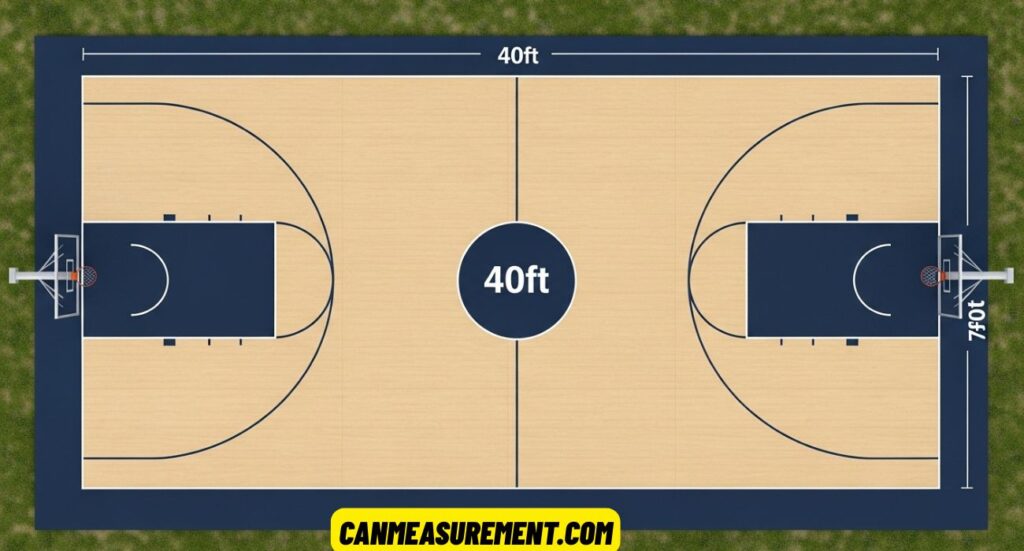
A measurement of 40 feet tall or long equals several other units that people commonly use for comparison. Knowing these conversions creates a stronger understanding of scale and allows you to compare dimensions across different industries. Whether you work with construction drawings, transportation equipment, or recreational vehicles, these numbers provide a practical foundation for understanding size.
When converted into other units, 40 feet in inches equals 480 inches, while 40 feet in meters equals 12.19 meters. The same measurement also equals 13.33 yards, 1219.2 centimeters, and 12192 millimeters. These figures help engineers, builders, surveyors, and everyday homeowners compare measurements quickly and accurately.
| Unit | Equivalent to 40 Feet |
| Inches | 480 inches |
| Yards | 13.33 yards |
| Meters | 12.19 meters |
| Centimeters | 1219.2 centimeters |
| Millimeters | 12192 millimeters |
A useful way to picture this distance is through a building height comparison. Most modern structures use floor heights close to ten feet. As a result, a 4 story building height often reaches around forty feet. This makes apartment complexes, hotels, and small office buildings excellent visual references whenever you need to estimate this length.
Another practical approach involves using a walking distance reference. The average adult stride measures roughly three feet. You can cover forty feet in about thirteen to fourteen steps. Because people walk these distances daily without noticing, converting measurements into steps creates an easy and memorable real life size reference.
Read Also : Water Bottle Dimensions: Complete Guide to Water Bottle Size, Height, Length, and Capacity
12 Common Things That Are 40 Feet Long or Tall
Many familiar objects measure close to forty feet. Some are designed to meet industry standards while others naturally reach this impressive size. These examples help you understand exactly how substantial a forty-foot object appears when standing nearby.
The following examples represent some of the most recognizable things that are 40 feet long and things that are 40 feet tall in everyday American life. They span transportation, construction, shipping, marine recreation, and wildlife, providing a broad range of useful comparisons.
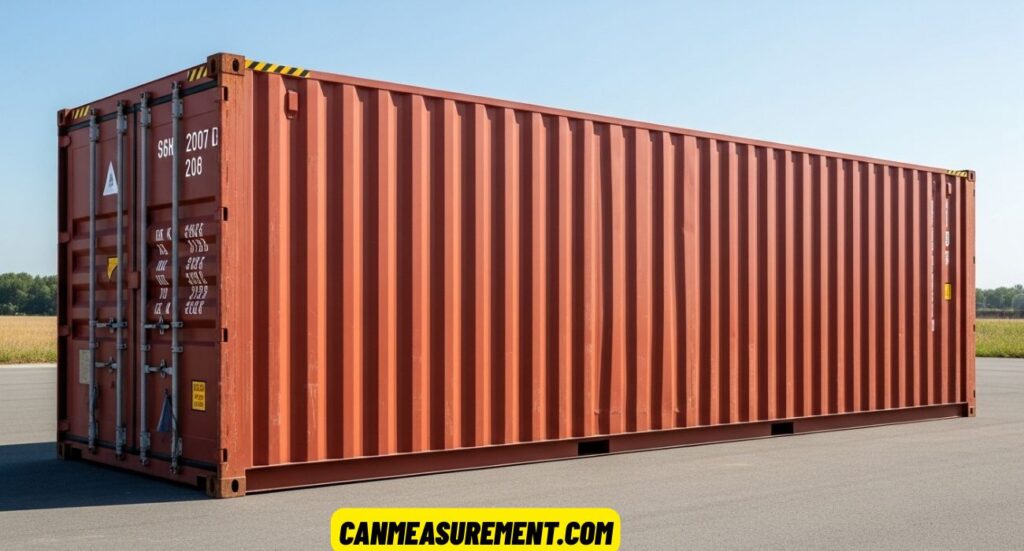
1. 40-Foot High-Cube Shipping Container
A 40-foot high-cube shipping container is one of the most common cargo units used in global trade. It measures exactly forty feet in length and offers extra interior height. Thousands of these containers move products through ports, rail terminals, and warehouses every day.
The design follows international standards, making transportation easier across ships, trucks, and trains. Businesses rely on this container size because it maximizes storage capacity while remaining efficient to handle. Its consistent dimensions have helped shape modern supply chain operations worldwide.
Beyond freight transportation, these containers have found new uses in construction and architecture. Builders convert them into homes, offices, retail shops, and workshops. When viewed in person, a forty-foot container provides one of the clearest examples of what forty feet looks like.
2. Full-Size City Transit Bus
A full-size city transit bus typically measures about forty feet long and serves as a familiar sight in major American cities. Public transportation agencies use this standard length because it balances passenger capacity with maneuverability on busy urban streets.
Millions of commuters ride these buses daily to reach workplaces, schools, shopping centers, and entertainment districts. Their size allows transportation systems to move large numbers of passengers efficiently while reducing traffic congestion and lowering the number of private vehicles on roads.
Because transit buses appear in nearly every metropolitan area, they provide a useful visual reference for forty feet. The next time a bus stops nearby, you can easily estimate this measurement by observing the distance from its front bumper to rear bumper.
3. Full-Size School Bus
A full-size school bus measures close to forty feet and plays an essential role in student transportation. School districts across the United States depend on these large vehicles to safely carry children between home, school, and extracurricular activities every day.
Most large school buses belong to the Type D category and offer seating for dozens of passengers. Engineers design them with safety features, strong structures, and excellent visibility. Their dimensions help maximize capacity while maintaining stability and reliability during daily operation.
For many people, the school bus becomes one of the earliest examples of a large vehicle they encounter regularly. Its familiar yellow appearance makes it easy to understand the scale of forty feet and compare other objects against this well-known reference.
4. Large Female Sperm Whale
A large female sperm whale can reach approximately forty feet in length, making it one of the most impressive natural examples of this measurement. These enormous marine mammals inhabit deep ocean waters and spend much of their lives searching for food.
Scientists study sperm whales because of their unique behavior, remarkable diving abilities, and social structures. Their bodies allow them to travel great distances and dive thousands of feet below the surface. Few marine species match their combination of size and strength.
When people try to picture forty feet, imagining a mature female sperm whale often helps. Seeing photographs, museum displays, or life-size models reveals just how massive these animals are and provides an unforgettable comparison for this impressive measurement.
5. Mid-Size Motor Yacht or Sailboat
A mid-size motor yacht or sailboat often measures around forty feet and represents a popular choice among recreational boaters. This size offers enough space for sleeping areas, storage compartments, and comfortable living arrangements during extended trips on the water.
Many experienced sailors consider forty feet an ideal sailboat length for coastal adventures and offshore cruising. The vessel remains manageable for small crews while providing the stability and amenities needed for longer journeys. This balance makes forty-foot boats highly desirable.
Marinas throughout the United States frequently accommodate boats of this size. Whether powered by engines or sails, these vessels provide an excellent real-world example of forty feet. Their length becomes especially noticeable when docked alongside smaller recreational boats.
6. 4-Story Residential or Commercial Building
A typical 4-story residential or commercial building stands about forty feet tall. Most construction projects use floor heights close to ten feet, creating a structure that reaches this measurement once all levels are completed and occupied.
You can find buildings of this height in neighborhoods, business districts, apartment complexes, and office developments. Their widespread presence makes them one of the easiest references for visualizing forty feet. Looking upward often provides a faster estimate than using measurements.
Architects, engineers, and developers frequently work with structures around this height because they offer practical space without requiring high-rise construction methods. As a result, a four-story building remains one of the most recognizable and accessible examples of a forty-foot measurement.
7. Semi-Trailer Truck Trailer
A standard semi-trailer used for freight transportation often measures around forty feet long. These trailers move products between distribution centers, warehouses, and retail stores across the United States. Their size allows companies to transport large quantities of goods efficiently every day.
Trucking companies favor this trailer length because it provides substantial cargo capacity while remaining practical for highway travel. Drivers regularly navigate these trailers through cities, industrial zones, and rural areas. Their dimensions help support the movement of products nationwide.
Most people encounter semi-trailers frequently while driving on major highways. Seeing one parked at a loading dock offers an excellent visual comparison for forty feet. The trailer’s long rectangular shape makes estimating this measurement surprisingly simple.
8. Large Mobile Home Section
A large mobile home section can reach close to forty feet in length before installation. Manufacturers build these sections in controlled factory environments and transport them to residential sites. Their dimensions allow builders to create spacious living areas efficiently.
Modern mobile homes often include open floor plans, multiple bedrooms, and full kitchens. The longer structure provides flexibility in design while maintaining affordability compared to many traditional homes. This balance has increased their popularity throughout many regions.
When transported on highways, these homes attract attention because of their impressive size. Observing a mobile home section in transit provides a practical understanding of forty feet and highlights how substantial this measurement appears in everyday life.
9. Utility Pole Span Between Supports
In many locations, the distance between utility poles can approach forty feet depending on terrain and infrastructure requirements. Electrical companies carefully plan these spans to support cables safely while maintaining reliability across neighborhoods and commercial districts.
Engineers calculate pole spacing based on wire tension, weather conditions, and local regulations. While exact distances vary, a forty-foot span often provides a useful example when discussing larger measurements. Utility systems rely on these calculations for long-term performance.
Because power lines appear throughout towns and cities, they offer an accessible visual reference. Looking at the distance between selected poles can help you estimate forty feet without specialized tools or measuring equipment.
10. Large Recreational Vehicle
Many luxury recreational vehicles measure close to forty feet in length. These motorhomes provide travelers with living spaces that include bedrooms, bathrooms, kitchens, and entertainment areas. Their size creates a comfortable experience for extended road trips.
Families often choose larger RVs because they combine transportation and accommodation in a single vehicle. The additional length allows manufacturers to include more features while maintaining mobility. This makes forty-foot motorhomes popular among long-distance travelers.
Campgrounds and RV parks frequently accommodate vehicles in this size category. Seeing one parked beside smaller campers quickly demonstrates how much space forty feet occupies and provides another useful real-world measurement comparison.
11. Small Passenger Ferry
A small passenger ferry can measure approximately forty feet and transport people across rivers, lakes, and coastal waterways. These vessels provide convenient transportation while offering enough deck space for passengers and essential operating equipment.
Ferry operators value this length because it balances passenger capacity with maneuverability. The vessel remains large enough to handle regular service while navigating docks and waterways safely. This practical design supports transportation in many waterfront communities.
Passengers standing aboard a ferry often gain a better appreciation for its dimensions. Looking from one end of the vessel to the other provides a clear visual reference for forty feet and helps translate measurements into something tangible.
12. Mature Gray Whale Calf
A mature gray whale calf can grow to lengths approaching forty feet before reaching adulthood. These remarkable marine mammals migrate thousands of miles each year between feeding grounds and breeding areas along North America’s Pacific coastline.
Marine biologists study gray whales to better understand migration behavior, communication patterns, and population health. Their substantial size demonstrates the impressive scale found in nature. Even younger whales can rival the dimensions of large vehicles and structures.
Aquariums, museums, and educational exhibits often display life-size whale models. Viewing one of these displays creates a memorable comparison and helps people understand how large forty feet really is when applied to a living creature.
How to Visualize 40 Feet Without a Measuring Tape

Many people need a quick way to estimate distance without carrying measuring tools. Fortunately, several familiar objects make it easy to visualize 40 feet with surprising accuracy. Buses, buildings, boats, and shipping containers all provide useful references because their dimensions remain relatively consistent across the country.
One of the simplest techniques involves using a full size city transit bus. Since the average bus measures approximately forty feet, comparing a nearby object against its length creates a reliable estimate. This method works especially well in urban areas where public transportation vehicles appear regularly.
Another effective method uses a walking distance reference. Most adults cover forty feet in roughly thirteen or fourteen normal steps. By counting your pace, you can estimate distance quickly without any specialized equipment. This simple approach proves useful during home projects, landscaping work, and property inspections.
A building height comparison also helps estimate vertical distance. Looking at a nearby four-story structure often provides a close approximation of forty feet. Because people encounter these buildings frequently, they remain one of the most practical tools for understanding large measurements.
| Visual Reference | Approximate Measurement |
| Full-size transit bus | 40 feet |
| School bus | 40 feet |
| Four-story building | 40 feet |
| Shipping container | 40 feet |
| Mid-size yacht | 40 feet |
Where Does 40 Feet Appear in Daily Life?
The influence of forty feet extends far beyond measurements on paper. This dimension plays a major role in transportation, construction, commerce, recreation, and urban planning. Many industries rely on standardized forty-foot equipment because it balances efficiency, functionality, and cost.
Within modern transportation infrastructure, forty-foot buses move millions of passengers each year. These vehicles support public transit systems and help cities reduce traffic congestion. Their widespread use means many Americans encounter a forty-foot object every day without realizing it.
The shipping industry depends heavily on the 40 foot shipping container. Ports, rail terminals, and warehouses use this standard size to streamline supply chain logistics. The consistent dimensions simplify loading procedures while improving transportation efficiency across global markets.
In construction, the familiar 4 story building height appears in apartment complexes, office developments, hotels, and educational facilities. Builders use these dimensions when planning projects and meeting regulatory standards. As a result, forty feet remains one of the most important benchmarks in modern development.
The marine industry also relies on this measurement. Many vessels designed for offshore sailing and long-distance cruising measure approximately forty feet. Their popularity demonstrates how this size delivers comfort, storage, and performance without becoming difficult to manage.
Whether you examine a high cube container, an urban transit bus, a yacht docked in a marina, or a nearby apartment building, forty feet appears throughout American life. These familiar examples transform an abstract number into a practical measurement that people can recognize, estimate, and understand with confidence.
Read Also : ZYN Can Dimensions: Standard Sizes, Measurements, and Complete Size Guide
What Does 40 Feet Look Like Compared to Common Vehicles?
When people try to estimate 40 feet, vehicles often provide the easiest reference point. A standard city bus, large RV, or commercial trailer measures close to this length. Because these vehicles appear daily on roads throughout the United States, they offer practical and memorable ways to understand the scale of forty feet.
Comparing measurements to familiar vehicles helps transform an abstract number into something tangible. Instead of imagining a ruler stretched across a parking lot, you can picture a transit bus or freight trailer. This method makes visual estimation easier and helps you recognize forty-foot dimensions in real-world settings.
How 40 Feet Compares to a Human Being
A measurement of forty feet is dramatically larger than the average person. Since most American adults stand between five and six feet tall, nearly seven average-height people would need to stand on each other’s shoulders to reach forty feet. This comparison immediately highlights the impressive scale involved.
Human comparisons work especially well because everyone understands personal height. When you visualize several people stacked vertically, the distance becomes easier to grasp. This simple technique creates a strong mental image and helps explain why forty feet feels so substantial in everyday situations.
Why 40 Feet Is Important in Construction Projects
The forty-foot mark carries significant importance in modern construction. Builders, architects, and engineers often use this height when planning residential developments, office spaces, and mixed-use buildings. It frequently represents the height of a four-story structure and influences numerous design decisions.
Many building regulations become more detailed as structures approach specific height thresholds. Fire safety systems, accessibility requirements, and structural considerations may change at certain elevations. Understanding forty feet helps property owners and developers communicate more effectively during planning and construction phases.
Popular Boats and Yachts Around 40 Feet Long
Many boating enthusiasts consider forty feet an ideal vessel length. Boats in this category provide enough room for comfortable living, entertaining guests, and extended travel while remaining easier to operate than much larger yachts. This balance explains their enduring popularity among experienced owners.
Manufacturers often design forty-foot vessels for coastal cruising and offshore adventures. Owners benefit from additional storage, sleeping quarters, and recreational features. Whether powered by engines or sails, these boats demonstrate how a forty-foot measurement can create practical and enjoyable living space.
Everyday Places Where You Can Find 40 Feet
You do not need to visit a shipyard or construction site to see forty-foot objects. Transit buses, school buses, apartment buildings, recreational vehicles, and commercial trailers all provide examples that appear regularly throughout American communities and transportation networks.
Recognizing these references helps improve your understanding of measurements in daily life. Once you become familiar with forty-foot examples, estimating distances becomes easier. Familiar surroundings suddenly transform into useful tools for visualizing size, height, and length without special equipment.
How Businesses Use 40-Foot Dimensions
Many industries rely on forty-foot dimensions because they provide an effective balance between capacity and efficiency. Shipping companies, logistics providers, transportation agencies, and warehouse operators frequently use equipment designed around this standard measurement to simplify operations and maximize productivity.
The widespread adoption of forty-foot standards improves compatibility across different systems. Containers move seamlessly between ships, trains, and trucks. This consistency reduces handling challenges and supports smoother supply chains, demonstrating why forty feet remains such an influential measurement in commerce.
Visualizing 40 Feet in Your Backyard or Neighborhood
Many homeowners struggle to picture forty feet until they compare it with familiar surroundings. A section of fencing, a driveway, or the distance across part of a backyard can often help create a useful reference for understanding how long forty feet actually appears.
Neighborhood landmarks offer equally valuable comparisons. A row of parked vehicles, the width of a residential lot, or the height of a nearby building can serve as visual guides. These everyday observations make large measurements feel more practical and understandable.
How 40 Feet Impacts Transportation and Logistics
Transportation systems depend heavily on standardized dimensions, and forty feet plays a major role in that framework. Buses, trailers, containers, and other equipment often use similar measurements because they balance carrying capacity with maneuverability and operational efficiency.
Logistics companies benefit from predictable sizing because it streamlines loading, storage, and transportation procedures. Consistent dimensions reduce delays and improve planning. As goods travel through ports, warehouses, and distribution centers, forty-foot equipment helps keep operations moving smoothly.
Interesting Facts About Objects That Measure 40 Feet
Many surprising objects share the same forty-foot measurement despite serving completely different purposes. A sperm whale, a transit bus, a shipping container, and a yacht may look unrelated, yet each provides a fascinating example of how this dimension appears across industries and environments.
These comparisons demonstrate the versatility of a single measurement. Nature, transportation, construction, and recreation all feature examples that reach forty feet. Exploring these similarities helps readers understand scale while discovering unexpected connections between everyday objects and large structures.
Why Understanding 40 Feet Can Be Useful
Understanding forty feet provides practical benefits beyond simple curiosity. Homeowners, travelers, builders, boaters, and students often encounter measurements that require quick estimation. Having reliable visual references allows people to make better decisions when evaluating space, distance, and dimensions.
Knowledge of common measurements also improves communication. Whether discussing property boundaries, vehicle sizes, construction plans, or storage requirements, a clear understanding of forty feet reduces confusion. This practical skill makes it easier to interpret dimensions in both professional and personal situations.
FAQs
What is equivalent to 40 feet?
Forty feet is roughly equal to a full-size city transit bus, a 40-foot shipping container, or the height of a typical 4-story building.
How many inches are in 40 feet?
There are exactly 480 inches in 40 feet because each foot contains 12 inches, making the calculation simple and accurate.
How far is 40 feet to walk?
An average adult can walk 40 feet in about 13 to 14 normal steps, which usually takes around 8 to 10 seconds at a comfortable pace.
What are some common things that are 40 feet long?
Common examples include a full-size school bus, a 40-foot high-cube shipping container, a mid-size yacht, and a large female sperm whale.
Conclusion
40 Feet becomes much easier when you connect it with real objects and buildings. A city bus, a shipping container, a sailboat, and a four-story building all help show this measurement in a simple way. These examples turn a number into something you can picture clearly. Knowing the size of 40 Feet can help with school projects, construction plans, travel, and everyday learning.
The measurement of 40 Feet appears in many parts of daily life across the United States. It plays an important role in transportation, shipping, architecture, and recreation. When you remember a few common examples, you can estimate distances and sizes with greater confidence. This knowledge gives you a practical understanding of scale and helps you recognize 40 Feet whenever you see it in the real world.