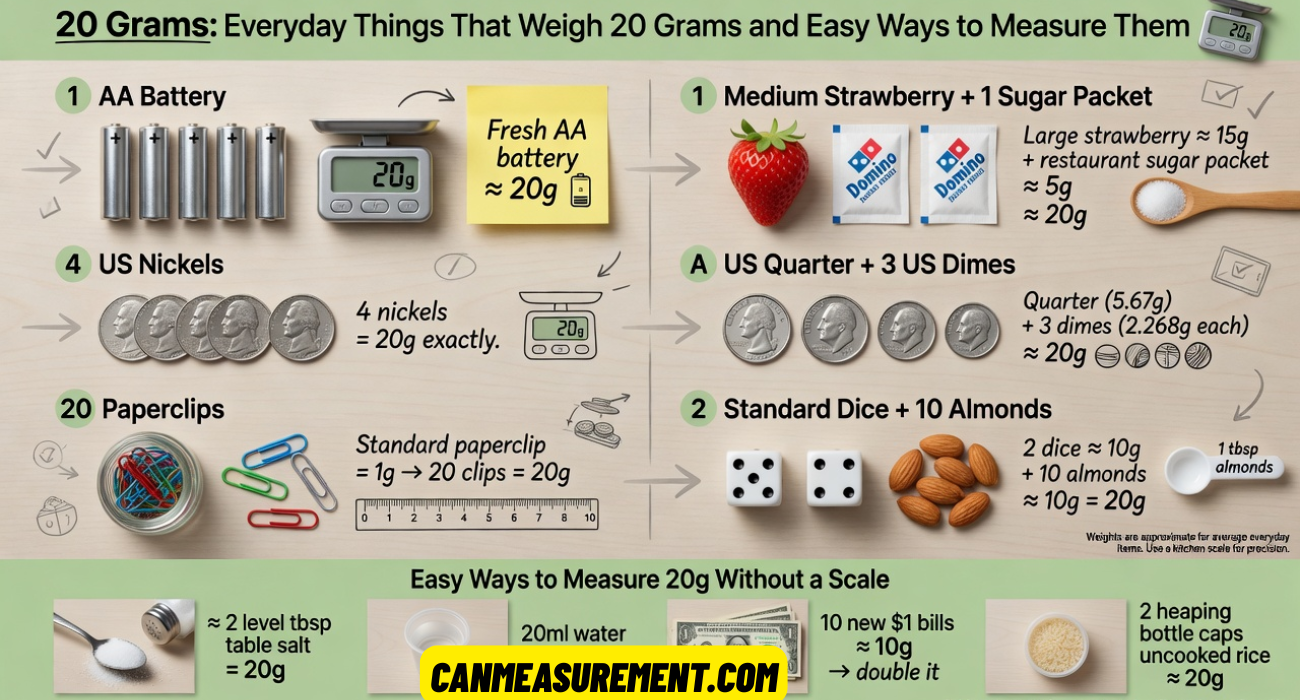
20 Grams: Everyday Things That Weigh 20 Grams and Easy Ways to Measure Them
20 Grams is a small unit of weight in the metric system, and it equals about 0.70 ounces in U.S. measurements.
Many common household items like coins, batteries, and candies weigh close to 20 Grams in daily life.
Understanding 20 Grams helps with cooking, weight comparison, school projects, and simple everyday measurements.
What Does 20 Grams Mean?
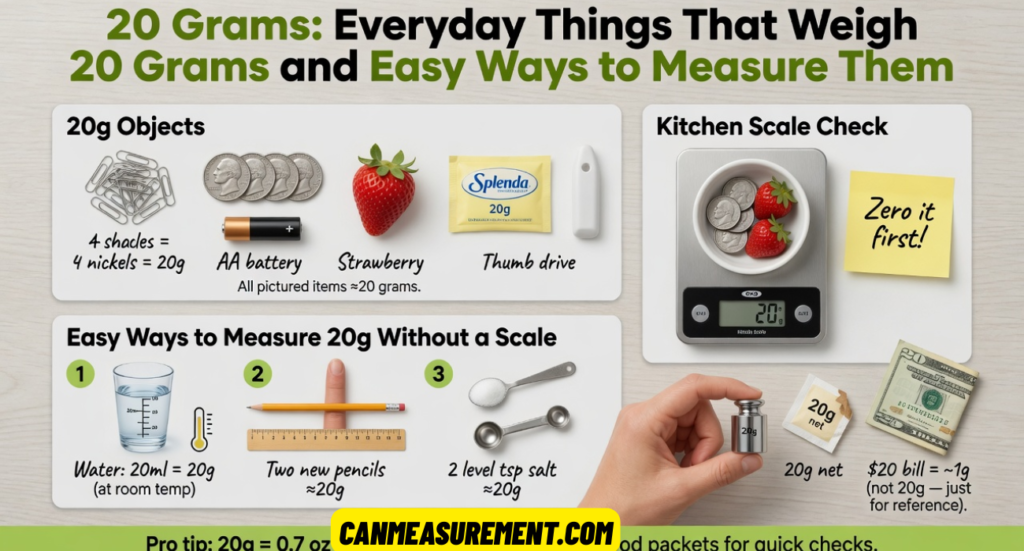
The term 20 grams refers to a small unit of weight from the metric system. In the American US measurement system, this equals roughly 0.70 ounces or less than one ounce. Even though it feels extremely light, you can still notice it when holding several tiny objects together. Many people use this amount for food portions, mailing envelopes, and lightweight crafts.
Learning how to picture a 20g weight improves your sense of weight comparison in everyday life. Most adults cannot accurately guess tiny weights without practice. That is why familiar examples matter so much. Once your brain connects common objects to this measurement, you develop stronger muscle memory for weight and better weight estimation skills over time.
| Measurement Type | Equivalent |
| Grams | 20 g |
| Ounces | 0.70 ounces |
| Pounds | 0.044 lbs |
| Milligrams | 20,000 mg |
18 Most Common Things That Weigh About 20 Grams
Many everyday products work as perfect common items weighing 20 grams. These examples help people understand tiny measurements without expensive tools. Some items weigh exactly 20 grams while others stay close enough for practical use. Small differences usually happen because of material density, moisture, or manufacturing changes.
These 20 grams examples are useful during cooking, shipping, and home projects. They also help students understand lightweight measurement concepts in a fun way. Using real-life objects feels much easier than imagining abstract numbers. Once you practice with these references, you quickly recognize similar weights in daily situations.
Read Also : 2 Ounces: Easy Conversions, Real-Life Examples, and Simple Measuring Tips
Four U.S. Nickels
Four U.S. nickels create one of the easiest ways to understand 20 grams in real life. Each nickel weighs exactly five grams under official mint standards. When combined together, they form a perfect 20g weight that feels small yet surprisingly noticeable inside your palm.
Many Americans already carry nickels inside wallets, cars, or kitchen drawers. That makes these coins excellent everyday weight references for quick comparisons. Unlike random household objects, nickels stay highly accurate because the government carefully controls their size, thickness, and material composition during production.
People often use coins for simple weight estimation during mailing, crafting, and cooking activities. Four nickels also help children understand the metric system through hands-on learning. This tiny stack creates a dependable small weight reference without requiring batteries, electricity, or expensive measuring equipment at home.
A Standard AAA Battery
A regular AAA battery offers another practical example of things that weigh 20 grams around the house. Most alkaline batteries weigh between nineteen and twenty-one grams depending on the brand. Their compact size makes them useful for quick handheld weight comparison throughout everyday situations.
The familiar AAA battery weight helps people picture lightweight measurements without confusion. Batteries feel slightly heavier than coins because dense internal chemicals sit inside the small metal casing. This extra density creates a balanced object that feels compact while still remaining easy to carry everywhere.
Most homes contain AAA batteries inside remote controls, flashlights, toys, and wireless devices. Because they are so common, they work perfectly for measuring without a scale. Many people use them as common household references when estimating mailing costs, food portions, or lightweight object measurements quickly.
Twenty Paperclips
Twenty standard paperclips create another simple example of common items weighing 20 grams. Most small paperclips weigh about one gram each. Once grouped together, they provide an easy and affordable method for understanding lightweight measurements inside classrooms, offices, and homes across the United States today.
The familiar paperclips weight works well because office supplies stay fairly consistent during manufacturing. Teachers often use paperclips when introducing children to weight comparison and basic science activities. Students can physically hold them, count them, and compare their combined mass against different lightweight objects nearby.
Office workers also use paperclips for quick household items weight comparisons during mailing or organizing paperwork. These tiny metal clips fit easily inside drawers or pencil holders. Since almost everyone owns paperclips already, they provide a practical and reliable small weight reference without additional spending required.
A Compact Disc (CD)
A classic compact disc gives readers another helpful way to picture 20 grams in everyday life. Most CDs weigh between fifteen and twenty grams without their protective plastic case. The thin polycarbonate material creates lightweight durability while still feeling solid enough when held carefully by hand.
The familiar compact disc weight became especially recognizable during the late 1990s and early 2000s. Music lovers, gamers, and computer users handled CDs daily before streaming services became popular. Because of that history, many adults still remember the light yet sturdy feeling of these discs clearly.
Even today, old CDs remain useful as lightweight objects for quick measurement comparisons around the house. Their wide shape also creates a strong visual example of how little 20 grams actually feels. This nostalgic object turns abstract numbers into something much easier for readers to imagine naturally.
A Tablespoon of Peanut Butter
A level spoonful of peanut butter creates a tasty example of 20 grams during cooking and nutrition tracking. Most creamy peanut butter servings weigh between sixteen and twenty grams depending on thickness. This familiar food helps explain portion control and practical cooking measurements in simple everyday language.
The popular tablespoon peanut butter example works especially well because many Americans already measure food using spoons. Dense ingredients often weigh more than expected because oils and proteins pack tightly together. Peanut butter therefore feels much heavier than fluffy foods like cereal, popcorn, or marshmallows.
Fitness enthusiasts often track peanut butter servings because they contain protein, healthy fats, and calories. Understanding this protein portion size improves meal planning and healthier eating habits. This kitchen example also teaches readers how ingredient density changes weight even when using the same spoon measurement size.
Twenty Jelly Beans
Twenty jelly beans provide one of the most colorful and enjoyable examples of things that weigh 20 grams. Most average jelly beans weigh close to one gram each. Once combined together, the candy creates a playful and surprisingly accurate candy weight reference for everyday learning activities.
The familiar jelly beans weight stays fairly consistent because candy companies carefully control size and shape during manufacturing. Premium brands may weigh slightly more due to thicker coatings or denser fillings. Even so, the overall weight remains close enough for quick comparisons and educational demonstrations at home.
Children especially enjoy learning about measurements through candy because the examples feel fun instead of technical. Teachers and parents often use jelly beans to explain weight comparison and counting skills together. This method transforms simple math and science lessons into engaging hands-on experiences for younger students everywhere.
A Disposable Lighter (BIC Lighter)
A disposable lighter offers another reliable way to understand 20 grams without using complicated measuring tools. Most full lighters weigh between eighteen and twenty-one grams because of the plastic shell, metal parts, and butane fuel stored safely inside the compact container during everyday use.
The well-known BIC lighter weight changes slightly as fuel gets used over time. A brand-new lighter feels heavier than one nearly empty. This small difference helps readers understand how liquids and gases contribute to total object weight even when changes remain difficult to notice visually.
Many adults already carry lighters while camping, grilling, or lighting candles around the home. Their portable size makes them practical pocket weight items for quick comparisons anywhere. Since they fit comfortably inside one hand, disposable lighters create excellent examples of lightweight everyday objects people recognize instantly.
Twenty M&M’s Candies
Twenty regular M&M’s candies create another simple and tasty example of 20 grams in real life. Each plain chocolate candy weighs about one gram. Together, the candies form a useful weight comparison that helps readers understand tiny measurements through familiar snacks found almost everywhere today.
The recognizable M&M’s weight remains fairly consistent because candy manufacturers carefully measure ingredients during production. However, peanut M&M’s weigh much more because the nut filling increases density and size. That is why standard milk chocolate candies work best when estimating a true 20g weight accurately.
Snack-sized examples often make measurements easier for children and adults to remember naturally. Candy comparisons feel more relatable than abstract numbers or scientific charts. This practical example also connects measurement awareness with portion control, making it useful for nutrition tracking and healthier eating habits over time.
A Standard Highlighter Pen
A fresh highlighter pen provides another easy example of common items weighing 20 grams in offices and classrooms. Most standard highlighters weigh between eighteen and twenty-two grams because of the plastic casing, ink supply, and felt writing tip stored inside the marker body during regular use.
The familiar highlighter pen weight surprises many people because the marker feels lighter than expected at first touch. Ink inside the pen adds hidden mass that most users never notice. As the ink dries over time, the pen slowly loses a tiny amount of weight naturally.
Students, teachers, and office workers use highlighters almost every day for studying and organization tasks. Since these markers remain widely available, they work perfectly as common household references for lightweight measurements. Their slim shape and balanced feel make them excellent practice tools for developing better estimation skills.
Two Tablespoons of Maple Syrup
Two tablespoons of maple syrup create another tasty example of 20 grams in kitchen measurements. Thick syrup feels heavier than water because sugar increases density inside the liquid. This sweet breakfast topping helps readers understand how ingredient texture changes overall weight during cooking and baking activities naturally.
The rich consistency of maple syrup makes it useful for explaining kitchen measurement conversions and food density. Unlike dry ingredients, sticky liquids spread slowly and pack tightly into measuring spoons. That is why syrup weighs more than fluffy ingredients like cereal, popcorn, or marshmallows in equal amounts.
Many Americans already use maple syrup on pancakes, waffles, and desserts throughout the year. Since kitchens commonly contain this ingredient, it works well for measuring without a scale during recipe preparation. This familiar example also improves understanding of accurate portion sizes and calorie tracking habits daily.
A Small Pack of Sugar
A small restaurant sugar packet weighs close to 20 grams when filled completely with granulated sugar crystals. These tiny packets appear lightweight at first glance, though the compact sugar particles create more density than many people expect during quick weight estimation exercises and kitchen comparisons.
The familiar granulated sugar weight helps readers understand how dry ingredients behave differently from liquids and soft foods. Sugar grains pack tightly together without leaving much empty space inside the packet. That compact structure increases total weight while still keeping the packet small and easy to carry.
Coffee shops, diners, and kitchens across America regularly stock sugar packets near drink stations and countertops. Because they are so common, these packets become practical everyday weight references for students, travelers, and home cooks who need fast measurement examples without professional weighing tools nearby today.
Three Quarters and One Penny
Three U.S. quarters and one penny together provide another clever example of 20 grams using everyday coins. Each quarter weighs about 5.67 grams while a penny weighs roughly 2.5 grams. Combined together, these coins create a close estimate useful for quick household measurement practice anytime needed.
This coin combination strengthens understanding of grams to ounces and simple weight comparison exercises. Unlike random objects, U.S. coins maintain consistent measurements because strict federal standards control their production process carefully. That consistency makes coins dependable references when practicing lightweight measurement skills at home or school.
Many people already carry quarters and pennies inside purses, pockets, or vehicles throughout the day. Since these coins remain easily accessible, they become practical tools for measuring without a scale. This method also teaches children basic math skills while helping them understand real-world measurements naturally and quickly.
A Small Box of Crayons
A tiny four-pack box of crayons often weighs close to 20 grams because of the wax material and lightweight cardboard packaging. These colorful drawing tools may seem almost weightless individually, though grouped together they create a noticeable handheld mass suitable for educational measurement demonstrations and creative classroom activities.
The compact household items weight of crayons helps children connect measurements with familiar school supplies. Wax crayons contain dense pigment and paraffin materials packed tightly inside narrow shapes. This combination creates lightweight yet durable coloring tools that survive frequent use by students and young children everywhere today.
Teachers sometimes use crayons for early science lessons involving counting, balancing, and weight comparison practice. Because crayons already belong in most classrooms and homes, they provide simple common household references for understanding small metric values without confusing technical explanations or expensive equipment needed for demonstration purposes.
A Stack of Twenty Dollar Bills
Twenty U.S. dollar bills stacked together weigh approximately 20 grams because each paper bill weighs close to one gram. Even though the stack appears thin and flexible, the combined paper fibers create a measurable amount that feels surprisingly noticeable once held inside your hand carefully today.
The familiar paper currency weight helps readers understand lightweight measurements using objects they already recognize daily. Since American bills share similar size and material regardless of denomination, their weights stay highly consistent. That reliability makes currency useful for quick estimation exercises involving small metric measurements and comparisons naturally.
Banks, stores, and wallets everywhere contain paper money, making this one of the easiest everyday weight references available. This example also demonstrates how lightweight materials can still create measurable mass once grouped together. Understanding these tiny differences improves practical weight estimation skills over time through repeated observation and handling.
A Large Strawberry
One large strawberry can weigh close to 20 grams depending on its size and water content. Fresh strawberries contain natural moisture that increases density and creates a heavier feel compared to dry snacks or lightweight processed foods commonly found inside kitchens and grocery stores across the United States today.
This fruity example helps explain why produce weights vary slightly between seasons and growing conditions. Moisture levels, ripeness, and berry size all influence final measurements naturally. Even so, strawberries remain excellent references for understanding healthy serving sizes and practical portion control during meal preparation and snack planning.
Nutrition experts often encourage people to weigh fruits and vegetables for accurate calorie tracking. Learning produce weights improves awareness of serving sizes and healthy eating habits. Since strawberries remain popular nationwide, they create relatable 20 grams examples that connect everyday food choices with real-world measurement understanding easily.
A Small USB Flash Drive
A compact USB flash drive weighs close to 20 grams depending on storage size and casing materials. These tiny devices contain internal electronic chips surrounded by lightweight plastic or metal shells. Even though they appear extremely small, their compact construction creates noticeable weight during quick handheld comparisons and testing.
The familiar shape of flash drives makes them useful lightweight objects for modern measurement examples. Students and office workers often carry them daily for storing documents, presentations, and media files. Since these gadgets remain portable and common, they create practical references for understanding small metric measurements naturally and efficiently.
Technology products demonstrate how compact devices can still contain measurable density inside tiny spaces. This example also introduces readers to modern office supplies weight comparisons beyond traditional paperclips and pens. Familiar digital tools therefore become surprisingly effective for practicing lightweight measurement skills in everyday life situations.
A Small Bottle of Nail Polish
A mini bottle of nail polish usually weighs around 20 grams because of the liquid polish, glass container, and brush applicator combined together. Although the bottle appears tiny, dense liquid ingredients and thick glass materials increase overall mass more than many people initially expect while handling beauty products.
The recognizable bottle shape creates an easy handheld weight comparison for readers already familiar with cosmetic products. Nail polish contains pigments, solvents, and oils packed tightly inside a compact container. This dense combination explains why such a small beauty item feels heavier than equally sized plastic objects nearby.
Many households store nail polish inside bathroom cabinets, makeup drawers, or bedroom organizers throughout the year. Since these bottles remain widely available, they work well as common household references during quick measurement exercises. Beauty products therefore become surprisingly useful tools for learning about lightweight metric values and density concepts.
A Small Handful of Almonds
A small handful of almonds creates another practical food-based example of 20 grams in daily life. Depending on size, about fifteen almonds usually reach this weight range. Nuts contain healthy oils and proteins that increase density while keeping the serving size visually small and easy to manage.
This healthy snack example helps readers understand nutrition labels and realistic serving amounts during meal planning. Almonds demonstrate how calorie-dense foods may weigh little while still providing substantial energy and nutrients. That understanding improves portion control and smarter food decisions throughout regular daily eating habits and routines.
Dietitians often recommend weighing nuts because portion sizes can become misleading without measurement awareness. Since almonds remain popular across the United States, they provide relatable kitchen reference items for learning practical food weights. Their crunchy texture and portable size also make them memorable examples for lightweight measurement practice.
How to Measure 20 Grams Without a Scale
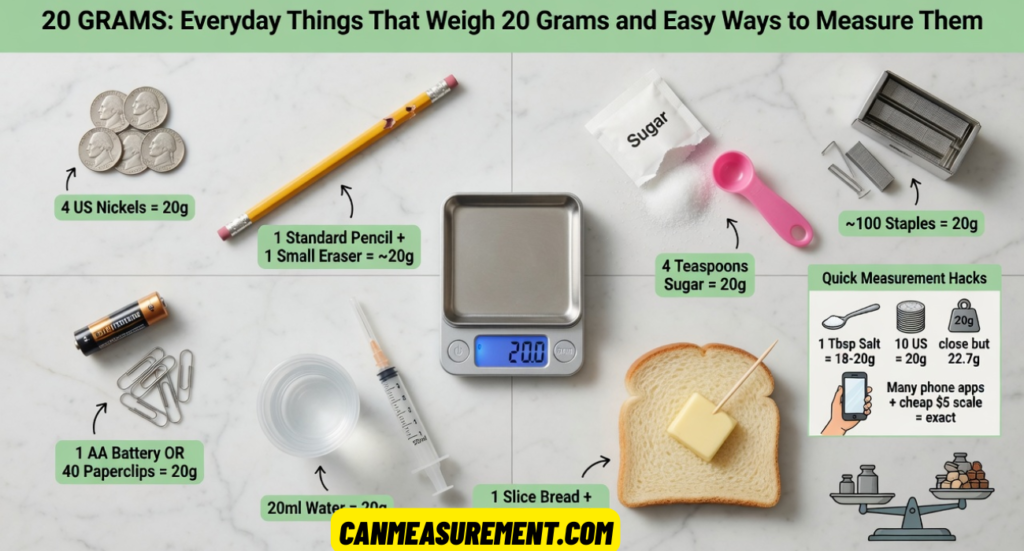
Not everyone owns a digital kitchen scale, especially for tiny measurements. Thankfully, several methods make measure 20 grams tasks easier without professional equipment. Household references provide quick estimates during cooking, crafting, and mailing lightweight packages.
Practicing with familiar examples improves your natural sense of balance and mass. Over time, your brain develops better muscle memory for weight through repetition. While these methods may not replace laboratory precision, they work surprisingly well for normal daily activities and quick estimates.
Using Common Household Items as References
Using familiar objects remains one of the easiest ways to practice measuring without a scale. Coins, batteries, paperclips, and candies provide dependable comparisons because manufacturers keep their sizes fairly consistent. This approach feels practical because the references already exist inside most homes.
People who cook frequently often keep several trusted reference items nearby. These tools support faster weight estimation during meal preparation and recipe adjustments. Simple comparisons also reduce mistakes when handling lightweight ingredients or mailing envelopes with strict shipping weight limits.
Kitchen Measurement Conversions
The kitchen offers many helpful tricks for understanding kitchen measurement conversions. Water creates the easiest example because 20 milliliters of room temperature water weighs exactly 20 grams. This relationship makes liquid measuring cups surprisingly useful for quick metric estimates.
Different foods vary because ingredients contain different densities and moisture levels. For example, granulated sugar weight differs greatly from flour tablespoon weight. Oil weighs less than water because of lower cooking oil density. Understanding these differences improves accuracy during baking and nutrition tracking.
| Ingredient | Approximate Weight |
| Water | 20 g |
| Flour | 8–10 g |
| Sugar | 12–13 g |
| Cooking Oil | 18 g |
DIY Balance Scale Method
A homemade scale offers a fun science experiment while teaching measurement basics. The classic DIY balance scale uses a ruler balanced across a pencil. This simple fulcrum method creates a lightweight seesaw that compares unknown objects against known weights.
Children especially enjoy building a homemade balance scale because it mixes physics with hands-on learning. You can place four U.S. nickels on one side and compare another object on the opposite end. Although not perfectly precise, this method demonstrates balance, mass, and measurement in an engaging way.
Comparing 20 Grams to Other Weights
Learning small measurements becomes easier when comparing them to lighter or heavier objects. These side-by-side examples train your brain to recognize subtle differences in mass. Over time, repeated comparisons strengthen your ability to estimate small weights accurately.
Many lightweight objects seem nearly identical until you physically hold them together. That is why regular practice matters. Comparing different sizes also helps with cooking, mailing, school activities, and shopping decisions where precise measurements improve results and reduce mistakes.
Lighter Than 20 Grams
Several tiny objects weigh far less than 20 grams. A single dollar bill represents a perfect example because normal U.S. paper currency weighs about one gram. Feathers, earrings, and postage stamps also fall far below this measurement range.
These comparisons sharpen your understanding of extremely light materials. Knowing the difference between tiny objects and a true 20g weight helps improve estimation skills. Eventually, you begin recognizing subtle changes in mass almost automatically through repeated practice and observation.
| Lightweight Item | Approximate Weight |
| Dollar Bill | 1 g |
| Nickel | 5 g |
| Feather | Less than 1 g |
| Small Earrings | 2–5 g |
Heavier Than 20 Grams
Some familiar items feel much heavier once compared directly against 20 grams. A golf ball weighs around 45 grams while a standard chicken egg reaches 50 to 60 grams. Even an AA battery weight exceeds the 20-gram range slightly.
These comparisons highlight how tiny 20 grams actually feels in the hand. Larger objects create a stronger mental contrast, making future estimates easier. Understanding heavier references also improves awareness of package size, ingredient amounts, and lightweight household products.
| Heavier Item | Approximate Weight |
| Golf Ball | 45 g |
| AA Battery | 23 g |
| Chicken Egg | 50–60 g |
| Computer Mouse | 80–100 g |
Visual Weight Progression
Building a sense of weight works much like building a muscle. You improve accuracy through repetition and comparison. A strong visual weight progression starts with 10 grams, then moves upward toward 20, 30, and 50 grams using familiar objects.
This method strengthens your internal sense of balance over time. People who cook often or handle small packages regularly become surprisingly accurate at estimating weights. Eventually, familiar objects become instant mental references that simplify measurements without relying constantly on scales or calculators.
Other Dimensions:
Measurements rarely exist alone because size and shape also affect how objects feel. Understanding dimensions alongside weight improves awareness of volume, density, and material thickness. A lightweight item can still appear large if it contains air or hollow sections inside.
Many readers also explore related topics involving inches, ounces, and container sizes. Combining these concepts improves understanding of packaging, recipes, and household products. Once you connect dimensions with weight, everyday objects begin making much more practical sense.
Why Understanding 20 Grams Matters in Daily Life
Most people never think about tiny measurements until they need them suddenly. Cooking, mailing packages, and tracking food portions all depend on accurate weight awareness. Understanding 20 grams helps you avoid mistakes during daily tasks while improving your confidence with lightweight measurements and small household objects.
Many lightweight products feel almost identical in your hand. However, repeated practice with common items weighing 20 grams trains your brain to recognize subtle differences naturally. This skill becomes useful during shopping, baking, organizing office supplies, and handling fragile products that require careful weight estimation.
Best Foods That Equal 20 Grams
Food provides one of the easiest ways to understand 20 grams examples because people handle ingredients every day. Several small snacks and healthy portions weigh close to this amount. Peanut butter, berries, nuts, and chocolate candies all create practical references for simple kitchen learning and portion awareness.
Nutrition experts often use grams because they offer better accuracy than cups or spoons. Understanding food weight supports healthier eating habits and smarter portion control decisions. Once you practice with small servings regularly, you quickly develop stronger awareness of calorie intake and balanced meal preparation.
How 20 Grams Compares to Ounces
Many Americans struggle with metric measurements because they usually think in pounds and ounces instead. Learning the relationship between grams and ounces removes confusion during cooking, shopping, and shipping. In simple terms, 20 grams equals approximately 0.70 ounces, which feels extremely light in your hand.
Understanding grams to ounces conversions also improves accuracy when reading nutrition labels or international recipes. Some imported products display measurements only in grams. Once you learn these small metric conversions, everyday tasks become easier and far less frustrating for beginners using the metric system.
Everyday Uses for 20 Gram Measurements
Small measurements appear everywhere even when people rarely notice them. Jewelry, spices, coffee beans, vitamins, and lightweight electronics often weigh close to 20 grams. Knowing this amount helps during packaging, organizing craft supplies, and comparing tiny household objects with better accuracy and confidence.
Many online sellers also depend on lightweight measurements for shipping calculations. Even a few extra grams can change mailing costs for small packages. Understanding shipping weight and tiny measurements helps businesses and homeowners avoid unnecessary expenses while packing products safely and efficiently.
Easy Tips to Improve Weight Estimation
Improving weight estimation takes practice rather than natural talent. The easiest method involves holding familiar objects repeatedly until your brain remembers their mass automatically. Coins, batteries, candies, and pens all create excellent training tools for developing stronger awareness of small measurement differences over time.
People who cook regularly often become surprisingly skilled at estimating weight without tools. Their brains slowly build muscle memory for weight through repetition and experience. Practicing with lightweight household objects each day strengthens accuracy naturally while reducing the need for constant measuring equipment.
Common Mistakes When Measuring Small Weights
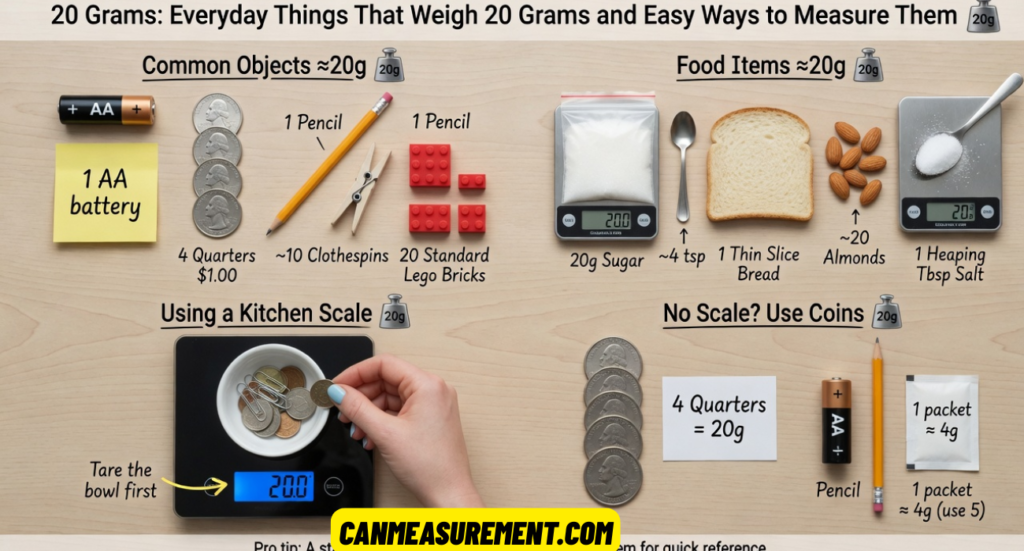
Many beginners make mistakes because they assume all lightweight objects feel identical. In reality, material density changes how heavy something feels in your hand. Metal products feel denser than plastic items even when both weigh exactly 20 grams, which can confuse first-time learners significantly.
Another common mistake happens during kitchen preparation and baking. Ingredients like flour, sugar, and oil all have different densities. This means spoons and cups may not provide accurate measurements every time. Understanding kitchen measurement conversions prevents cooking errors while improving recipe consistency and food quality.
FAQs
How heavy is 20 grams in everyday life?
20 grams feels very light and equals about 0.70 ounces. It is close to the weight of four U.S. nickels or one standard AAA battery.
What household items weigh around 20 grams?
Several common items weighing 20 grams include twenty paperclips, a tablespoon peanut butter serving, a disposable BIC lighter, and twenty M&M’s candies.
Can I measure 20 grams without a scale?
Yes, you can use everyday weight references like four nickels, a AAA battery, or 20 ml of room temperature water for quick measuring without a scale.
Why is understanding 20 grams useful?
Knowing 20 grams examples helps with cooking measurements, nutrition tracking, mailing lightweight packages, and improving overall weight estimation skills.
Conclusion
20 Grams becomes easy when you use common things around your home. Four nickels, a AAA battery, and twenty paperclips all help you picture this small weight clearly. These simple examples make cooking, mailing, and school projects much easier. You can also improve your weight estimation skills with regular practice and careful observation.
Learning about 20 Grams also helps you understand the metric system in daily life. Small measurements may look confusing at first, yet familiar objects make them simple and practical. Kitchen tools, candies, and office supplies all create useful weight references. With time, you can quickly recognize lightweight objects without using a scale every time.