Average Living Room Size (USA Guide): Standard Dimensions, Layout Ideas & Design Tips
The Average Living Room Size means the common space used for living rooms in most homes in the USA. It shows how much area people usually have for daily sitting, relaxing, and family time. Most homes follow this standard size range for better comfort and simple planning.
Many people feel unsure when they look at their living room space because it can feel too small or too large. This creates confusion when choosing furniture or planning layout. Knowing the average size helps remove that confusion and gives a clear idea of what feels normal.
The Average Living Room Size also helps in making smart home decisions. It guides you in selecting the right furniture, spacing, and design style. When you understand it well, you can create a living room that feels balanced, comfortable, and easy to live in every day.
What is the Average Size for a Living Room in the USA?
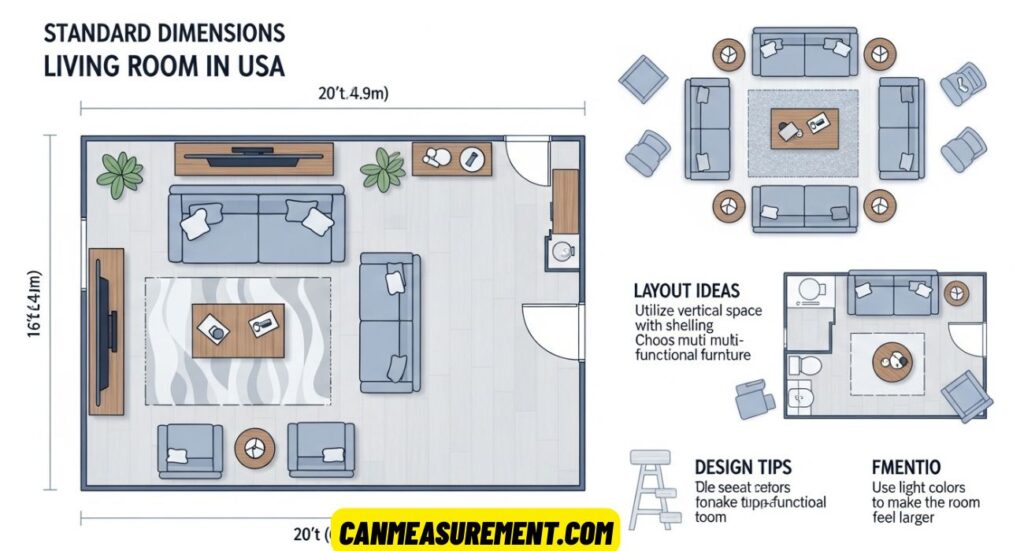
The average living room size in the USA usually falls between 200 to 400 square feet. Most homes sit close to a 12×18 feet living room, which feels balanced for daily use. This range defines the typical US living room size and helps you understand if your space is small, medium, or large.
Many homeowners misjudge their space until they compare it with standard living room dimensions. For example, a 12×12 living room size feels compact while a 15×15 living room size offers more comfort. Designers often use the 200 to 400 square feet living room range as a baseline for planning furniture and flow.
Read Also : Beer Can Dimensions: Complete Guide to Beer Can Sizes, Height, Diameter, and Capacity in the USA
Standard Living Room Dimensions by Home Type
The living room size by home type changes a lot across the USA. An apartment living room size is usually tighter, often around 150–250 sq ft. Suburban homes expand this space to 300–500 sq ft, giving more freedom for interior design and creative layouts.
In modern houses, suburban home living room size often supports open layouts. This creates a strong connection with dining and kitchen areas. That’s where open concept living room design becomes popular because it improves traffic flow space and makes the home feel larger than it actually is.
Living Room Size: Small, Medium, and Large Dimensions
Living rooms fall into three simple groups: small living room dimensions, medium living room size, and large living room dimensions. A 12×12 living room size is small, a 12×18 feet living room is medium, and a 20×20 living room size is large. Each size changes how you plan your space optimization.
Understanding square footage planning helps avoid mistakes in furniture buying. A 300 sq ft living room feels very different from a 180 sq ft space. That’s why designers use room dimensions guide principles to match furniture scale with comfort, movement, and daily use patterns.
Small Living Rooms (120-200 Square Feet)
A small living room size usually ranges from 120 to 200 square feet. A 12×12 living room size is a common example. It feels tight but still works well with smart furniture arrangement. People often use compact sofas and foldable tables to improve space use.
To improve cozy living room design, you need smart storage solutions and light colors. For example, a sofa size for 14×14 room must stay compact to keep walking space open. Designers often rely on multi functional furniture to avoid clutter and improve daily comfort.
Medium Living Rooms (200-300 Square Feet)
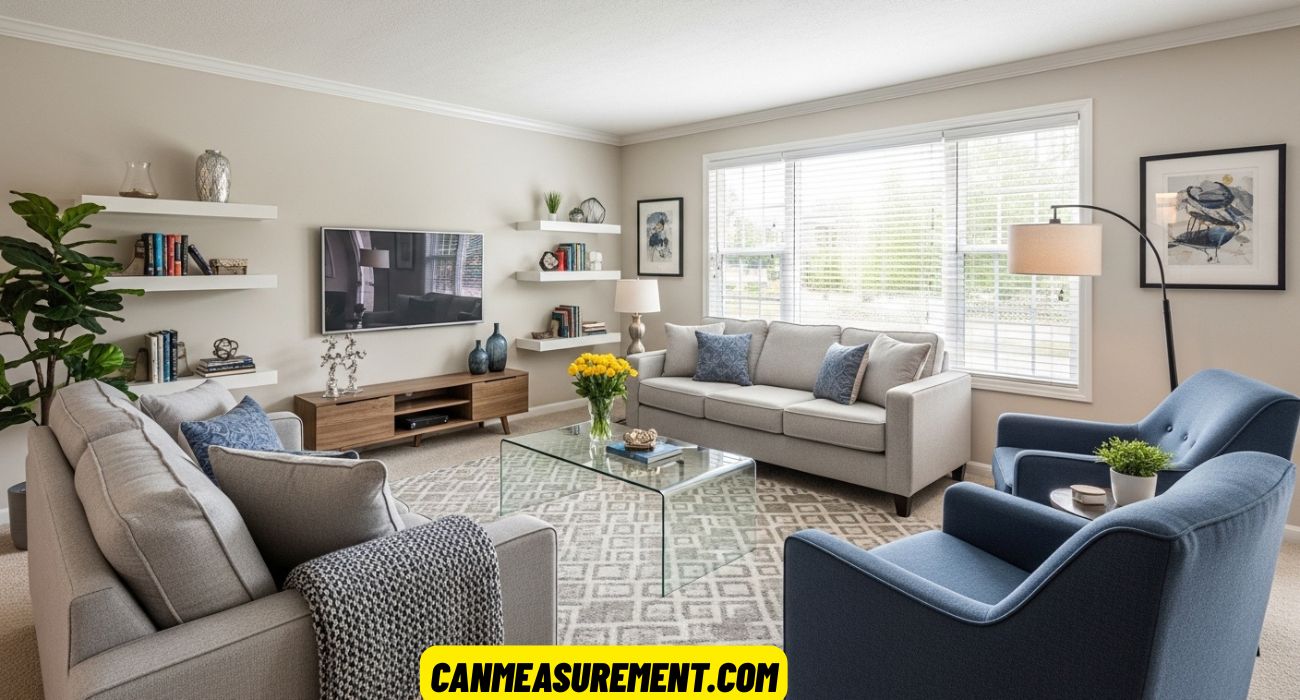
A medium living room size is the most common in the USA. A 12×18 feet living room or 15×20 living room dimensions usually fall in this category. It offers balance between comfort and space, making it ideal for families and social gatherings.
This size works well for living room layout ideas and flexible seating. A 15×15 living room size allows sofas, chairs, and tables without feeling crowded. Designers often apply the 2/3 rule living room concept to keep furniture balanced and improve spatial planning.
Large Living Rooms (300+ Square Feet)
A large living room size starts at 300 square feet and goes beyond. A 20×20 living room size feels very open and often needs careful zoning in living room design. Without planning, the space can feel empty or disconnected from daily use.
Large spaces work best with layered modern home interior design ideas. Designers divide areas using rugs and lighting to improve seating arrangement. Strong lighting design and thoughtful furniture placement help maintain warmth and avoid a cold, empty feeling in big rooms.
Make Small Living Rooms Feel Larger
Small rooms depend heavily on space optimization and smart tricks. Light colors, mirrors, and vertical shelves improve visual depth. A clever mirror placement strategy can double the feeling of space, especially in tight apartments where every inch matters.
Good home decor ideas focus on simplicity. Using light furniture improves traffic flow space and avoids crowding. Designers often use storage solutions hidden inside sofas or tables. These tricks make even a small apartment feel open and breathable.
Optimize Medium-Sized Living Rooms
Medium spaces offer the best flexibility for interior design. You can divide zones for watching TV, reading, or relaxing. A well-planned ideal living room layout improves comfort and supports natural movement without blocking pathways.
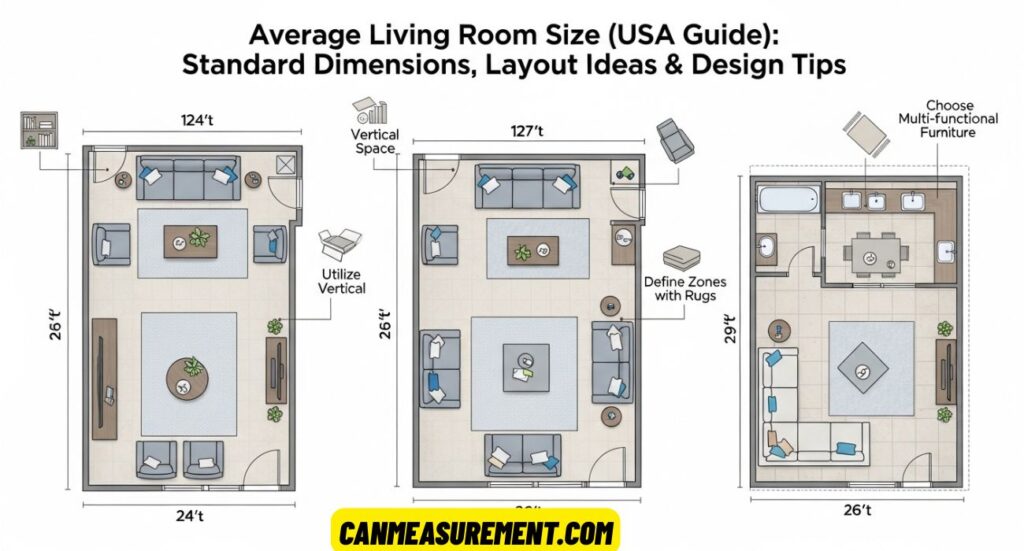
Rugs play a big role in area rugs placement because they define zones clearly. Combined with smart lighting design, they create warmth. Proper furniture arrangement helps maintain balance and avoids overcrowding, making the room feel both practical and stylish.
Design Large Living Rooms Without Empty Spaces
Large rooms often struggle with emptiness, even with good furniture. That’s why zoning in living room design is important. You can create multiple areas like a reading corner, TV zone, and social seating area to fill space naturally.
Using open concept living room layouts helps connect spaces visually. Designers also rely on bold textures and oversized furniture to improve balance. Without proper spatial planning, even a 20×20 room can feel cold and disconnected, so thoughtful design is key.
Best Furniture Layout for Average Living Room Size in USA Homes
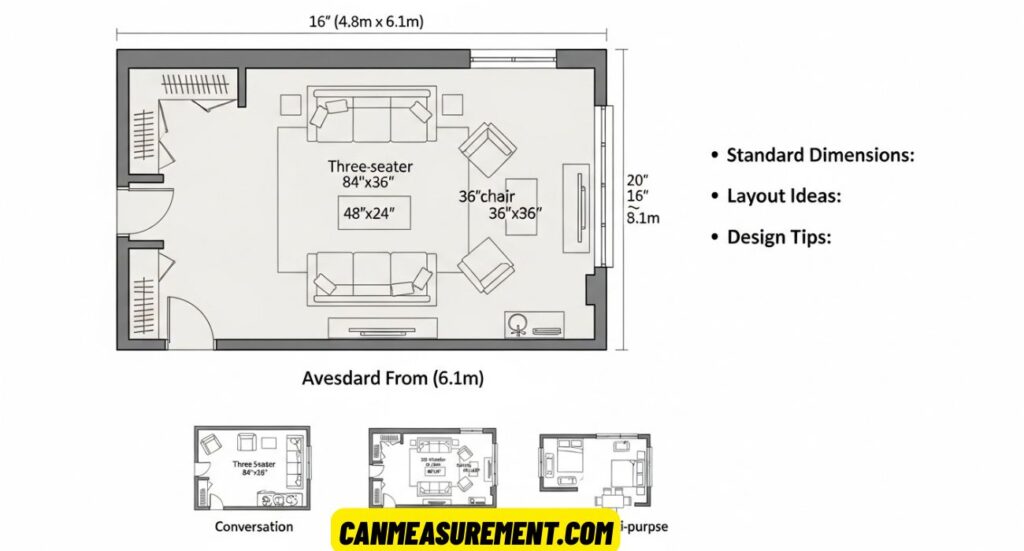
A smart furniture arrangement can completely change how your average living room size feels. When you place the sofa against the main wall and keep open walkways, the room instantly feels larger. Many designers follow simple spatial planning rules to improve comfort without overcrowding the space.
In most homes, the right ideal living room layout depends on shape and size. For a 12×18 feet living room, placing seating toward the center improves balance. You also need proper traffic flow space so movement feels natural. Even small changes in layout can improve daily comfort and visual appeal.
Read Also : Kitchen Trash Can Dimensions (USA Guide 2026): Sizes, Heights & Smart Fit Tips
How Interior Design Affects Standard Living Room Dimensions
Good interior design changes how you experience standard living room dimensions. A well-designed space feels bigger even if the square footage is small. Light colors, open shelves, and smart furniture choices create a smooth visual flow that improves comfort and style at the same time.
Modern home decor ideas focus on simplicity and function. In an open concept living room, design elements connect kitchen and dining areas. This improves flow and makes the home feel unified. Designers often use clean lines and balanced layouts to support both beauty and practicality.
Choosing the Right Sofa Size for 12×12 Living Room Space
Picking the right sofa for a 12×12 living room size is very important. A compact sofa keeps the space open and avoids blocking movement. Many homeowners choose slim designs that fit well into small living room dimensions without making the area feel crowded.
A sofa size for 14×14 room should never overpower the space. Instead, it should support balance and comfort. Pairing it with light chairs improves seating without clutter. Smart furniture arrangement helps maintain proper flow and ensures the room stays functional for daily use.
Living Room Size by Home Type and Lifestyle Needs
The living room size by home type depends on how people live. Apartments often have compact layouts, while suburban houses offer larger spaces. This difference changes how you plan furniture, storage, and movement within the room for daily comfort.
In an apartment living room size, flexibility matters more than size. Suburban homes allow more open concept living room designs with larger seating areas. Understanding your lifestyle helps you choose the right setup so your space feels both practical and comfortable.
Smart Space Optimization Tips for Small Living Room Dimensions
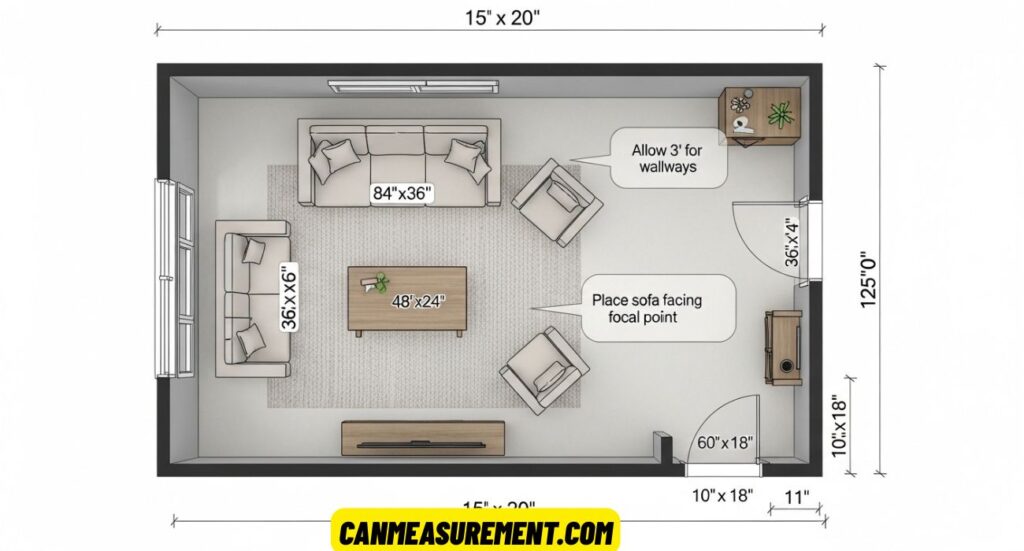
Good space optimization makes a small room feel much bigger. Using vertical shelves and hidden storage keeps floors open. Light colors also help reflect natural light, which improves brightness and creates a more open feeling in tight areas.
Many designers focus on multi functional furniture for small homes. A sofa with storage or foldable tables saves space. This approach improves cozy living room design without clutter. Even a small 12×12 living room size can feel stylish and organized with the right planning.
Modern Home Interior Design Ideas for Medium Living Rooms
A medium living room size gives you flexibility for creative modern home interior design. You can mix comfort and style without worrying about space limits. Balanced furniture placement helps maintain openness while still offering enough seating for family and guests.
Designers often use area rugs placement to divide zones in medium rooms. This improves structure and visual flow. Combined with proper lighting design, it creates a warm atmosphere. A well-planned room always feels inviting and easy to use every day.
Traffic Flow Space Planning for Comfortable Living Rooms
Proper traffic flow space ensures smooth movement inside your living room. When walkways stay clear, the room feels more open and comfortable. Designers usually leave enough space between furniture pieces to avoid crowding and improve daily usability.
In living room layout ideas, movement paths are just as important as furniture. A well-planned ideal living room layout prevents blockage near doors and seating areas. This makes the space safer, more functional, and easier to enjoy for everyone in the home.
Zoning in Living Room Design for Large Spaces
Large rooms often need zoning in living room design to avoid emptiness. You can divide space into entertainment, reading, and conversation areas. This creates structure and makes the room feel more balanced and useful for daily life.
A 20×20 living room size benefits most from clear zones. Designers use rugs and furniture groups to separate areas visually. This method improves spatial planning and makes large rooms feel warm instead of empty or disconnected from daily use.
Best Lighting Design Ideas for All Living Room Sizes
Good lighting design changes the mood of any living room. Natural light makes spaces feel bigger, while soft lamps add warmth. Combining both creates balance and improves comfort in daily use.
In smaller spaces, lighting helps improve small living room dimensions by reducing shadows. In larger homes, layered lighting supports open concept living room layouts. Proper lighting improves visibility, mood, and overall design harmony in every type of home.
Storage Solutions That Improve Living Room Layout Efficiency
Smart storage solutions keep living rooms clean and organized. Hidden drawers, wall shelves, and storage ottomans reduce clutter while saving space. This improves both function and appearance in everyday use.
Good storage also supports better furniture arrangement. When items are neatly stored, the room feels more open and breathable. Even a 300 sq ft living room can feel spacious when storage is planned carefully as part of the design strategy.
FAQs
What is the average living room size in the USA?
The average living room size in the USA is usually between 200 and 400 square feet. Most homes commonly feature around a 12×18 feet layout.
Is a 12×12 living room a good size?
Yes, a 12×12 living room is a small but functional space. With smart furniture placement, it can feel comfortable and well organized.
Is a 20×20 living room considered large?
Yes, a 20×20 living room is considered large at about 400 square feet. It allows multiple seating areas and flexible layouts.
What is the best layout for a living room?
The best layout keeps clear walking space and centers seating around a focal point. It balances comfort, flow, and functionality.
Conclusion
Average Living Room Size helps you plan your home in a smart way. Most homes in the USA use about 200 to 400 square feet for living rooms. This space works well for daily life, family time, and small gatherings. When you know these numbers, you can choose better furniture and avoid wasting space. It also helps you understand if your room feels small or large compared to normal homes.
The Average Living Room Size also guides better design choices for comfort and balance. Small rooms need simple layouts and light colors. Medium rooms allow more flexibility for seating and movement. Large rooms need clear zones so they do not feel empty. With the right planning, any size can feel warm and useful. Good design always makes life easier and more comfortable in every home.